
Myths and Misconceptions About Native Americans
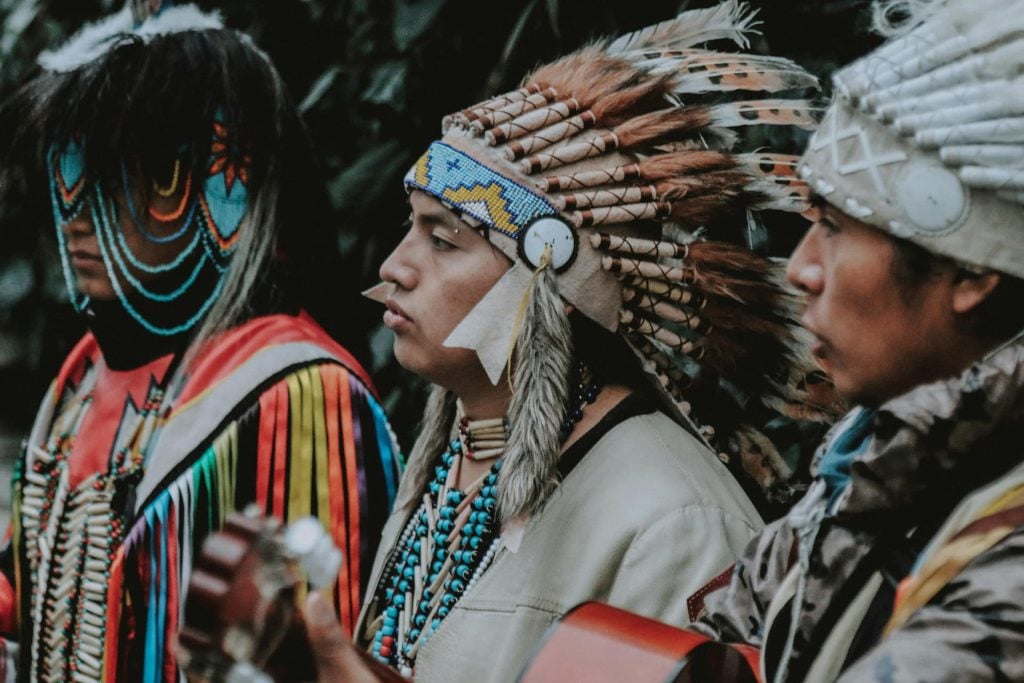
Native American communities have a history that dates back thousands of years. Yet, many Americans today have little knowledge about their complex civilizations, rich cultures, cultural traditions, unique languages, and ways of life. However, Native Americans live across both rural and urban areas, and continue to shape modern society.
Lapses in the American education system are partly to blame. Stereotypes created by mainstream media and warped historical narratives (mostly politically motivated) have also contributed significantly to the deep-rooted misinformation about Native people within modern society.
According to the Census Bureau, there are only around 7.7 million Native Americans in the U.S. right now, making up a little over 2% of the total population. This may pale in comparison to some of the other ethnic groups in the United States. But the prominent historical presence of Indigenous communities in the Americas and their contributions to the world through sophisticated societies make it vital that we delve deeper into their lives. Native Americans are part of native nations across North America and South America, each with unique histories and government systems.
More about Indigenous men and women is available on Native American Netroots. It is a people search website where you can run background checks on people, find relatives (including Native Americans), and read about Indian affairs, aboriginal people, native cultures, native nations, contemporary lives of the Native people, as well as oral traditions and indigenous languages.
But first, let’s separate fact from fiction in this blog post. Here are some of the common myths about Native Americans that are likely distorting your views and understanding of Indigenous cultures and Indigenous history in general.
The Americas Was an Untamed Wilderness When European Settlers Arrived
This is far from reality. Before European colonization, the American continent was home to large, organized societies with complex systems of trade, agriculture, and governance.
Native Americans used advanced agricultural techniques, such as companion planting, terraced farming, and irrigation networks, and were the first to introduce corn, squash, beans, and many other crops to the world.
They also had elaborate and progressive governance systems based on representative councils, consensus decision-making, and other principles prevalently used in modern society. The Haudenosaunee Confederacy, for example, is well known as one of the world’s oldest participatory democracies.
So, whenever someone tells you that American Indian history is “primitive,” know that it’s a myth. Native Americans have always maintained complex relationships with the natural world and carefully managed their natural resources.
Native Americans Are Wiped Out: The Myth of the Vanishing Indian
The misconception of the fast-dwindling Native American nations is fueled mainly by the early narratives propagated to justify the seizure of native land with the rapid expansion of European settlements.
Indeed, Native American women and men are outnumbered by the settlers, and their population has dramatically declined due to wars, diseases, etc., brought upon by the Europeans.
However, Indigenous communities are very much in existence to this day, preserving their customs, traditions, and cultural identities while evolving with the times. In fact, their population has grown by 160% in the 10 years up to 2020. And they continue to be a vibrant part of modern American society.
The Term “Native American” Represents a Single Expansive Culture
Although “Native American” is an acceptable term to identify the Indigenous peoples of the Americas, it primarily serves to represent them as a broad-based ethnic group.
What many people don’t realize is that there are a multitude of Indigenous ethnic groups spread across the United States, each with its own distinct migration history, governance structure, Native American culture, language, traditions, practices, and belief systems. Alaska Native communities are among these groups, maintaining distinct customs shaped by their environment.
Currently, there are 574 tribes that are federally recognized and around 400 without federal recognition. Among them, they speak more than 175 languages. Needless to say, Native American communities are pretty diverse. And many of the members from native communities prefer to be identified by their tribal affiliation.
The First Thanksgiving Was a Celebration of Friendship and the Beginning of an Annual Tradition
This prevalent misconception about the history of the Thanksgiving holiday, celebrated each year in America, is not only misleading but also blatantly distorts important historical events.
According to it, the Pilgrims established a close friendship with the Wampanoag and, in celebration of it, held the first Thanksgiving in 1621 (which became an annual tradition to appreciate Native Americans).
In reality, the relationship between the Pilgrims and the Wampanoag was not based on trust. Instead, it was a fragile alliance rooted in political motives. Many historians believe that the Thanksgiving feast was intended purely as a one-off event, for which Native Americans were not invited.
Using Native American Symbolic Elements in Sports Is a Way of Honoring Indigenous Communities
The use of Native American terms, names, images, gestures, and Native American mascots in big league sports in the United States has become a major source of controversy in recent years (think of the Kansas City Chiefs and the Washington Redskins, to name a few).
This practice is seen as disrespectful by Indigenous communities in several contexts. To begin with, it creates a stereotypical image of their people based on historical accounts and outdated perceptions.
The adoption of their cultural components (often out of context and for commercial benefits) by non-Native American groups without consent or proper understanding is also construed as cultural appropriation.
Many Native Americans Receive Special Government Rights and Benefits
What most people perceive as special treatment awarded to Indigenous people by the United States government are, in fact, part of treaty obligations negotiated when tribes ceded their land, primarily during 1778 – 1871. (For example, the United States promised services like healthcare and education in exchange for tribal territory.)
Therefore, what may look like “free benefits” or “handouts” are actually treaty rights. However, it is important to note that many of these arrangements are severely underfunded and unfulfilled (as in the case of the Indian Health Service and the Bureau of Indian Education).
So, contrary to popular belief, a large number of Native women and men don’t receive adequate government benefits. It is common to find that they pay federal and state taxes, have student loans, and rely on Medicaid and private health insurance like everyone else.
The Myth of Rich Casino Indians
Does every Native American tribe have a casino generating massive riches for its members? Not really.
It is true that certain tribes have built significant wealth thanks to gaming (take the Shakopee Mdewakanton Sioux Community, the wealthiest of them all, that operates the Mystic Lake Casino Hotel and disperses around $1 million annually to each of its members).
Casinos play a huge role in these communities, creating employment and alleviating poverty. But not every tribe has a gambling establishment. Currently, only 243 out of the 574 federally recognized tribes run casinos. And not all of them reward their citizens with substantial payouts (which depend on a variety of factors like the revenue generated and the number of tribal members).
To Conclude
Despite the long history of Indigenous communities in what we now call America, many people today have very little knowledge about their cultures and the past. Even worse, there are lots of myths, misconceptions, and negative stereotypes that have distorted the views regarding Indigenous peoples and the history of the United States.
Many of these are steeped in prejudice and ignorance and are outright disrespectful to Indigenous people and their native identity and ancient history. Such myths stereotype the diverse Native American populations, undermine the injustices they have encountered, challenge their sovereignty, and, not to mention, fuel resentment and discrimination on Indian lands.
So, dispelling misconceptions and building better awareness, grounded in facts rather than fiction, is of great importance. It is the only way to make America a truly vibrant, inclusive, and equitable nation.
Related Posts
-
 5 Famous Native American Authors
For thousands of years, Native American society relied on oral …
5 Famous Native American Authors
For thousands of years, Native American society relied on oral … -
 Historical Trauma Among Native Americans: Here’s What You Need to Know
Everyone, no matter how young or old, deals with traumas. …
Historical Trauma Among Native Americans: Here’s What You Need to Know
Everyone, no matter how young or old, deals with traumas. … -
 Native American Contributions That Changed the World
It's difficult to imagine the contemporary world without revolutionizing inventions, …
Native American Contributions That Changed the World
It's difficult to imagine the contemporary world without revolutionizing inventions, … -
 7 Interesting Facts About Native Americans
The first human migration to the Americas dates back several …
7 Interesting Facts About Native Americans
The first human migration to the Americas dates back several …