
5 U.S. Cities with the Most Native Americans
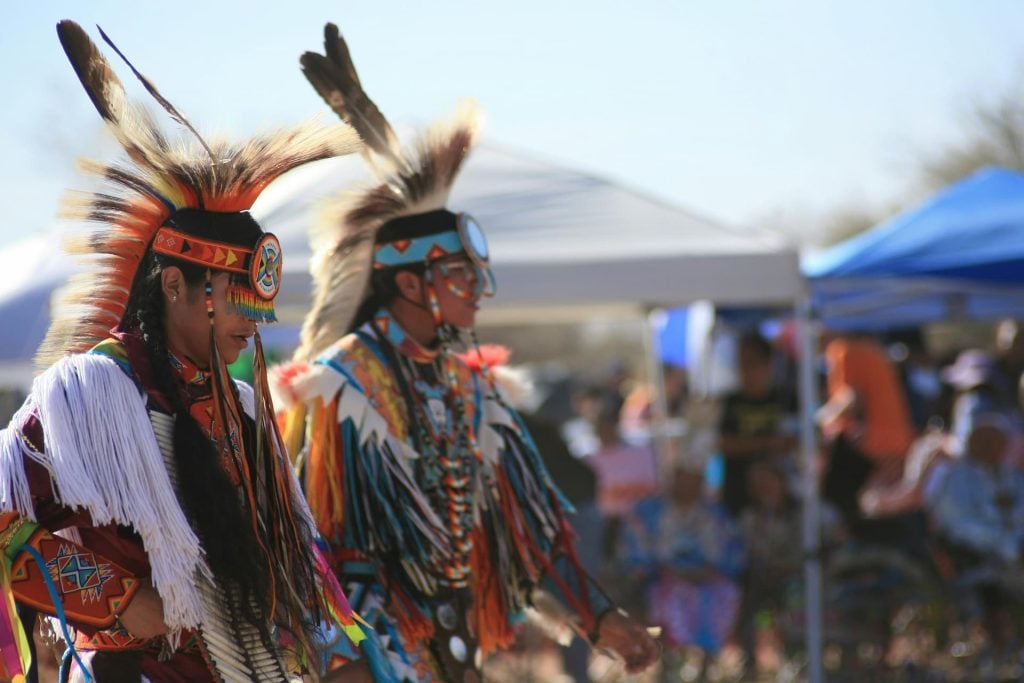
Although American Indian and Alaska Native communities are scattered across the United States, their populations are notably concentrated more in certain regions. California, Oklahoma, and Arizona, in particular, boast large numbers of Native Americans in their states, resulting in highly diverse, vibrant, and inclusive cultures. Navajo Nation, Cherokee Nation, Sioux, Chippewa, Apache, and some others are especially widespread in the country.
What about the cities with the most Native Americans? The U.S. Census Bureau statistics (based on the American Community Survey 5-Year Estimates) provide answers to this question. Many Indigenous people today live in large metro areas, where access to education, employment, and cultural institutions has encouraged the growth of urban Native communities. Note that the population estimates here consider those who self-identify as Native American alone and or partially in combination with one or more other races or ethnic origins.
More people in the country and abroad are willing to learn important information about Native Americans, their reservations, traditions, resources, and understand what has changed throughout the decades and centuries. Others would also like to know more about their Native American relatives. All of this you can check on Native American Netroots, a people search engine.
Now, here are the cities with highest Native American population percentage, according to census data.
1. New York City, NY
NYC is well known for its heterogeneous population. Over 28.3% of the 8.8 million New Yorkers are Hispanic. Another 20.2% and 15.6% identify as Black and Asian. And over 3 million of the residents were born outside America. The Big Apple has the largest Jewish community outside Israel, the largest African-American community in the U.S., and the highest number of Asians in any American city.
It also claims the largest community of Native Americans—137,734 to be exact. This may be just a mere 1.45% of all New Yorkers. However, it is still a sizable representation of the 7.7 million total Indigenous population of the United States.
While many Native Americans in NYC are descendants of the Lenape people, you can also find members of other tribal nations, like the Mohawk, Shinnecock, and Unkechaug. If you are ever in NYC, don’t forget to check out the National Museum of the American Indian, American Indian Community House (AICH), and the Redhawk Native American Arts Council to explore their vibrant cultures and heritage.
2. Los Angeles, CA
One of the biggest appeals of LA is its ability to thrive as a melting pot of countless cultures and ethnicities. Los Angeles residents represent over 140 nationalities and speak around 224 languages. Hispanic or Latino communities make up nearly half (46.94%) of the city’s population. Asians and Black/African Americans (alone) comprise 19% of all Angelenos.
And what about the Indigenous population? According to the Census Bureau estimates, LA has 95,853 Native Americans—the second-highest in a U.S. city—and is home to the largest urban Native population in America.
There are over 100 Indigenous groups in Los Angeles, including the Tongva (the original inhabitants of the LA Basin), Chumash, Tataviam (Fernandeño), and Serrano. (Interestingly, some of them still haven’t gained federal recognition, although they are recognized at a state level.)
3. Phoenix, AZ
With 65,904 Native Americans, Phoenix ranks third among cities with the most Indigenous people. However, taken as a percentage of the city’s total population, Phoenix outranks both New York City and Los Angeles (3.33% vs. 1.45% and 2.13% respectively).
Currently, there are 22 federally recognized Native American tribes in Arizona (such as the Tohono O’odham, Hopi, Navajo nation, and Hualapai). Phoenix is closely connected to several of them, especially the Gila River Indian Community and Salt River Pima-Maricopa Indian Community.
The long history of these Indigenous tribes and their sophisticated civilizations is still evident in the area. The remnants of irrigation canals and the centuries-old four-story “great house” at Casa Grande Ruins, the two cliff dwellings at Tonto National Monument, and the Hohokam rock carvings (petroglyphs) at South Mountain Park (which likely date back over a 1,000 years) are good examples.
4. Oklahoma City, OK
The capital of Oklahoma may not have the largest or most diverse population in the United States. However, with 53,988 Native American people living there, it has the fourth–highest concentration of Indigenous people, who happen to make up 6.77% of the city’s total population.
The state has a significant number of federally recognized Native American tribes in America (hardly a surprise considering its history as Indian Territory), several of which have close ties to Oklahoma City. These include Cheyenne & Arapaho, Wichita, Chickasaw, Citizen Potawatomi, and Absentee Shawnee, to name a few.
The rich history and traditions of these communities are woven into many aspects of the city’s modern-day culture. The ancient artifacts at the First Americans Museum, Native art and dance at the annual Red Earth Festival, and the guided tours at the Chickasaw Cultural Center are some of the things you don’t want to miss when you visit Oklahoma City.
5. Chicago, IL
Chicago isn’t just a major hub of finance and commerce. It is also one of the most ethnically diverse big cities in America. Over 30% of its residents are Black or African American, and close to 30% identify as Hispanic or Latino. The Asian community is also growing and currently accounts for approximately 8% of the city’s total residents.
How about Indigenous people? There are around 51,014 Native Americans, who make up 1.67% of the total population. The Chicago area is the ancestral grounds of the Ojibwe, Odawa, and Potawatomi tribes (known as the Council of the Three Fires). There are also many others, like the Miami (whose word “shikaakwa” led to the name Chicago), Ho-Chunk, Kickapoo, and Menominee.
Chicago’s Indigenous residents are believed to represent around 175 Native American tribes, and the city claims the sixth-largest urban American Indian community in the United States
Wrapping Up
Many parts of America have been the habitats of Indigenous groups who built complex civilizations for thousands of years.
Although their populations dwindled significantly after European settlement and they were uprooted from their original land through forced relocation, over half of the Indigenous population was lost due to disease, violence, and displacement. Despite this, many of their tribes continue to thrive to this day in major cities.
New York City, Los Angeles, Phoenix, Oklahoma City, and Chicago host the largest communities of Native Americans in the U.S., with Houston and Albuquerque close behind.
Unfortunately, most of the original structures and creations of Native cultures have long been destroyed. But many of these cities and states, including New Mexico, California, Florida, Alaska, New York, and others, still have preserved remnants, artifacts, and other resources that serve as evidence of the strong ties Indigenous people have had with the Americas since prehistoric times. And, hopefully, the expected population growth and renewed cultural initiatives will help ensure that these traditions are remembered and actively celebrated.
Related Posts
-
 Native Americans During World War II: Things You Probably Didn’t Know
When the United States entered World War II, Native Americans …
Native Americans During World War II: Things You Probably Didn’t Know
When the United States entered World War II, Native Americans … -
 Myths and Misconceptions About Native Americans
Native American communities have a history that dates back thousands …
Myths and Misconceptions About Native Americans
Native American communities have a history that dates back thousands … -
 5 Famous Native American Authors
For thousands of years, Native American society relied on oral …
5 Famous Native American Authors
For thousands of years, Native American society relied on oral … -
 Historical Trauma Among Native Americans: Here’s What You Need to Know
Everyone, no matter how young or old, deals with traumas. …
Historical Trauma Among Native Americans: Here’s What You Need to Know
Everyone, no matter how young or old, deals with traumas. …