By admin

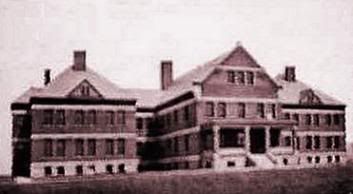
The Hiawatha Asylum for Insane Indians

In the United States the concept of insanity has often been associated with notions of racial purity and the racial superiority of Europeans. In 1898, Congress was considering establishing a facility for insane Indians. One senator testified: “It has been well established that the percentage of insanity is greater among half-breeds than among full-blooded Indians. … Continued
By admin

The Hopi Reservation

The Hopi had lived in their mesa-top villages in what is now northern Arizona for many centuries before the United States acquired the right to govern the area. They did not, however, sign a treaty with the United States and therefore did not reserve a portion of their homelands for themselves.   The designation “Hopi” … Continued

By admin

The Indian Journal

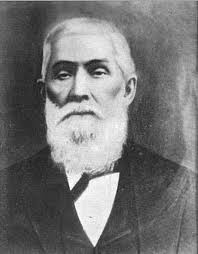
The media has never been fair and balanced when it comes to serving Indian people and reporting on events which impact Indian lives. Many Indian leaders have felt that it is critical for Indians to have media which they control. One example of Indian media can be seen in The Indian Journal, a newspaper born … Continued

William Potter Ross

By admin

“The Christmas Coat: Memories of Sioux Childhood”

“The frigid gale blew sideways across the South Dakota prairie, and cold rain lashed the children’s bare faces. They leaned into it to stay upright on the reservation road to school.” Thus begins a children’s book by Virginia Driving Hawk Sneve. Having spent her childhood on the Rosebud Sioux Reservation, she has written about her … Continued

By admin

Wild West Shows

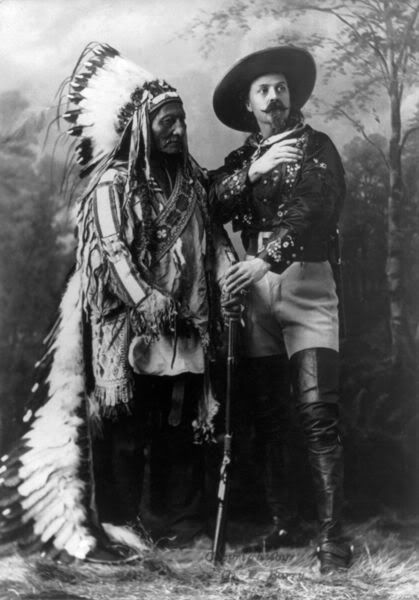
The nineteenth-century wild west shows did a great deal to firmly entrench the stereotype of the American Indian in American culture. This stereotype, loosely based on generic Plains Indian cultures, portrays Indians as savages, as a vanishing people destined to go extinct in the face of American superiority, and hindrances to the inevitability of Manifest … Continued

By admin

The Creation of the Fort McDowell Reservation

When the Yavapai came under the jurisdiction of the United States following the acquisition of what was to become Arizona, they were a loose association of locally organized groups speaking mutually intelligible but nevertheless distinct sub-dialects. Traditional Yavapai territory stretched from the San Francisco Peaks in the north, to the Pinal Mountains in the east, … Continued

The Creation of the Fort McDowell Reservation

By admin

Indian Art in the Late 19th Century

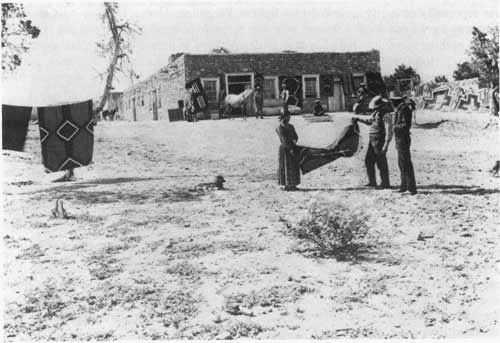
While the mainstream art world did not begin to recognize American Indian art as a distinctive art form until the twentieth century, during the late nineteenth century the market for American Indian arts-or more accurately, arts and crafts-began to develop. This market included pottery, weavings, drawings, paintings, and other items. The new market was driven … Continued

By admin

Indians on Exhibit

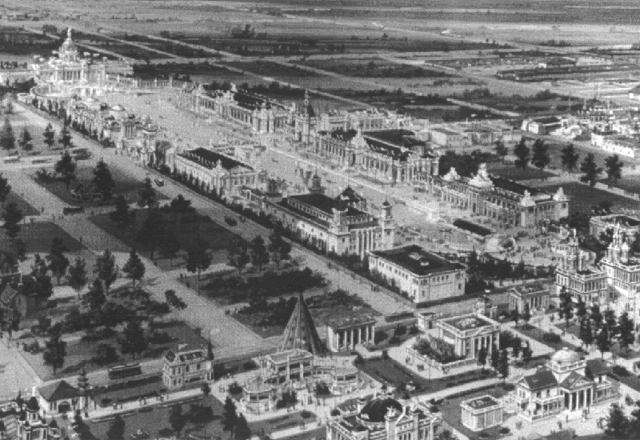
During the nineteenth century, expositions and world fairs were seen as a profitable way for communities to promote themselves while educating the masses. Since Indians were seen as a vanishing people at this time, Indians were often an important attraction at these events. The 1898 Trans-Mississippi and International Exposition held at Omaha, Nebraska, was no … Continued

By admin

Suppressing Indian Journalism

While reservations were lands which were initially reserved for exclusive Indian use, the United States has often administered these lands with the intention of assimilating the Indians into American culture. In dealing with the Indian nations, which the Constitution and the Supreme Court had declared to be sovereign entities known as “domestic dependent nations,” the … Continued

Suppressing Indian Journalism

By admin

The National Congress of American Indians

The oldest, largest, and most representative group of American Indians and Alaska Natives is the National Congress of American Indians (NCAI). Many people also feel that it is today the most politically influential Indian organization in the United States. The NCAI started in the 1940s.   In 1944 a group of 22 prominent Indians-20 of … Continued