By admin

California Indian Baskets in the Maryhill Museum

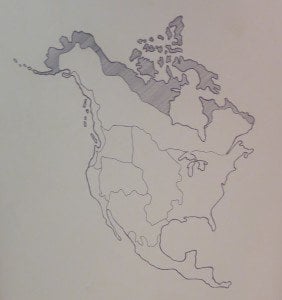
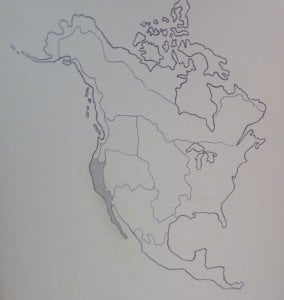
The California culture area has the widest variety of native languages, ecological settings, and house types of any North American culture area. The shaded area on the map shown above displays the California culture area. Basketry was, and still is, important to the California Indians. In his book Indians of Lassen Volcanic National Park and … Continued
By admin

Plateau Women’s Clothing in the High Desert Museum

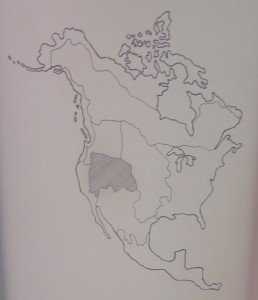
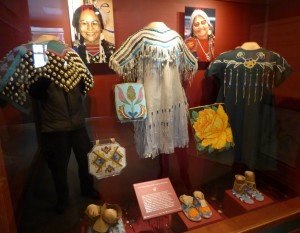
The Plateau Culture Area is the area between the Cascade Mountains and the Rocky Mountains in Washington, Oregon, Idaho, British Columbia, and Western Montana. From north to south it runs from the Fraser River in the north to the Blue Mountains in the south. Much of the area is classified as semi-arid. Part of it … Continued

By admin

American Indian Code Talkers

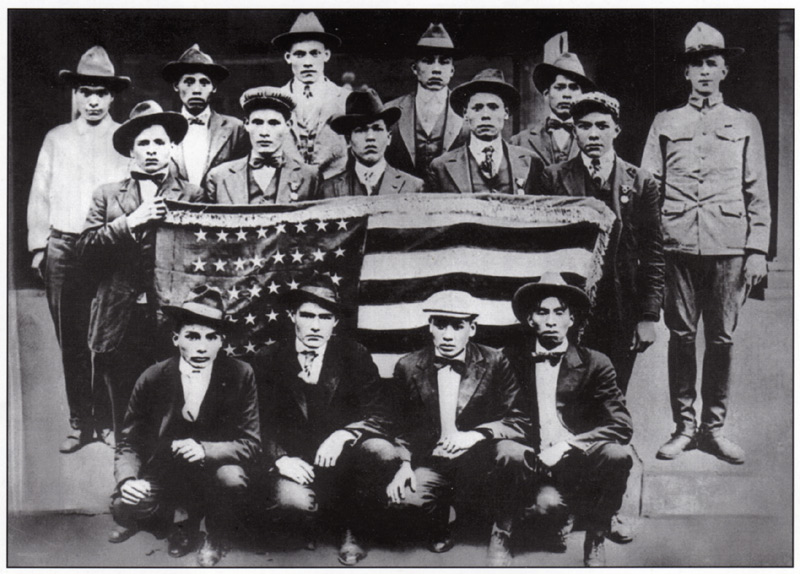
One of the concerns in organized military warfare is the need for communication and the need to conceal that communication from the enemy. During the nineteenth century, the American military relied on bugles, drums, and flags to communicate on the battlefield. By the beginning of the twentieth century, the nature of long distance human communication … Continued

By admin

Great Basin Baskets

The Great Basin Culture Area includes the high desert regions between the Sierra Nevada and the Rocky Mountains. It is bounded on the north by the Columbia Plateau and on the south by the Colorado Plateau. It includes southern Oregon and Idaho, a small portion of southwestern Montana, western Wyoming, eastern California, all of Nevada … Continued

By admin

Plateau Indian Reservation Life

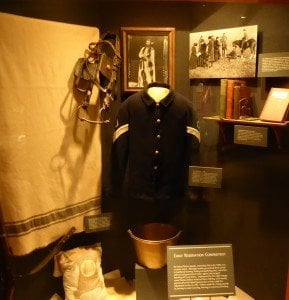
The Plateau Culture Area is the area between the Cascade Mountains and the Rocky Mountains in Washington, Oregon, Idaho, British Columbia, and Western Montana. From north to south it runs from the Fraser River in the north to the Blue Mountains in the south. Much of the area is classified as semi-arid. Part of it … Continued

By admin

Yup’ik Masks

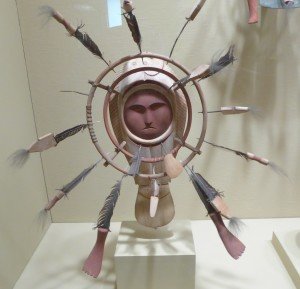
For the Central Alaska Yup’ik Eskimo, spirituality was focused largely on the need to secure food for hunting. As with other animistic hunting peoples, animals were felt to have souls which would be reincarnated. Thus, rituals sought to appease the soul of the animal so that it would give itself to the Yup’ik hunters who … Continued

By admin

Ancient America: Columbia River Pictographs

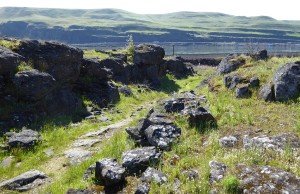
For more than 10,000 years Indian people have lived adjacent to the Columbia River. In the Columbia Gorge area, hundreds, if not thousands, of archaeological sites provide silent testimony to this long period of human occupation. Rock art, in the form of petroglyphs and pictographs, is found throughout the area. The area along the Columbia … Continued

By admin

Some Arctic Artifacts

The Artic Culture Area includes the Aleutian Islands, most of the Alaska Coast, the Canadian Artic, and parts of Greenland. It is an area which can be described as a “cold” desert. Geographer W. Gillies Ross, in his chapter in North American Exploration. Volume 3: A Continent Comprehended, writes: “The North American Arctic is usually … Continued

By admin

Northwest Coast House Panels

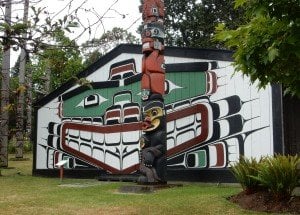
Prior to the European invasion, the people of the Northwest Coast lived in large, multi-family houses built with planks on a post and beam frame which were usually arranged in a single row facing the water. The shaded area on the map shown above shows the Northwest Coast culture area. This map is on display … Continued

By admin

Historic California Indian Cultures

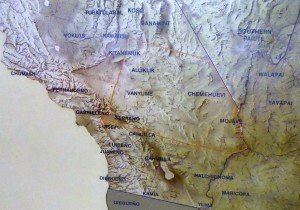
One of the displays in the San Bernardino County Museum in Redlands, California, is entitled Sacred Earth and subtitled Understanding our past and honoring cultures that thrive today. Shown below are some artifacts associated with historic Southern California Indian cultures. The map above shows the location of the historic tribes of Southern California. According to … Continued