By admin

Aztec Figurines

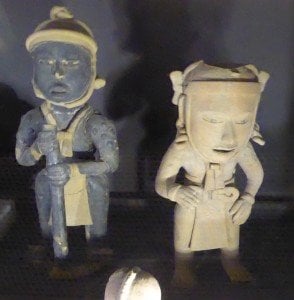
In major museums, only a small fraction of the artifacts held by the museum are on display and interpreted for the public. Most of the museum’s artifacts are in vaults where they are available only to researchers. The Los Angeles County Museum of Natural History maintains a Visible Vault in which visitors can view hundreds … Continued
By admin

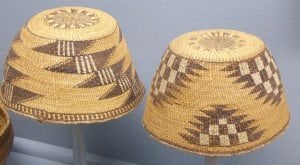
California Women’s Woven Hats

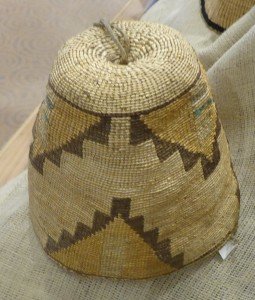
While the Plains Indian feathered headdress has become the stereotypical image of American Indian headgear, there is little awareness of the headgear worn by Indian women. In the far west—in the Northwest Coast, Plateau, and California culture areas—Indian women wore basketry caps. The Maryhill Museum of Art near Goldendale, Washington, has a collection of California … Continued

By admin

Inupiaq Art

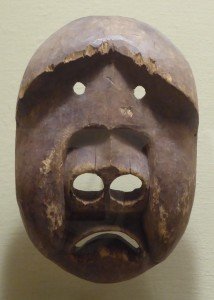
The Inupiaq homeland is in Northwest Alaska and North Alaska. The Portland Art Museum has some Inupiaq items on display. Shown above: Inupiaq mask made about 1900 from wood Shown above. Inupiaq pipe made about 1900 from ivory, wood, and paint. The art work on the pipe shows a walrus hunt in which the hunter … Continued

By admin

Family and Reservation Community in the Columbia Plateau

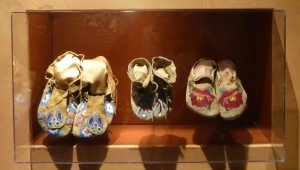
The High Desert Museum in Bend, Oregon, has a display Family and Reservation Community which shows how Plateau Indian identity has been preserved by families. According to the Museum display: “Since ancient times, the Plateau family served as the sanctuary of identity. Despite the changes brought about by reservation life, many Plateau Indians refused to … Continued

By admin

Northwest Coast Baskets

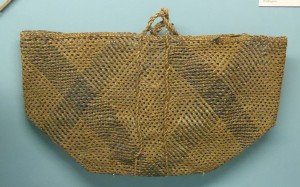
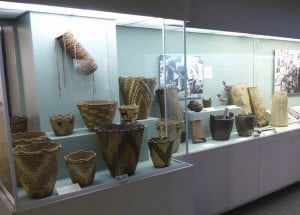
The Northwest Coast culture area stretches along the Pacific coast between the Cascade Mountains and the ocean. It extends north of California to Alaska. This is an area which is the home to many Indian nations who traditionally based their economy on the use of sea coast and river ecological resources. The Northwest Coast culture … Continued

By admin

Columbia River Beadwork

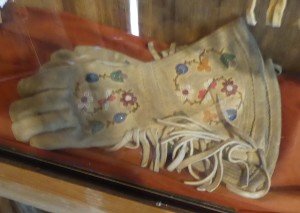
Today, the Columbia River marks the boundary between Oregon and Washington. The river was named for the ship Columbia Rediviva whose captain, John Gray, sailed into the area in 1792. Gray was the first of many Euroamerican fur traders who would invade the area over the next half century. American Indians had lived along the … Continued

By admin

Plateau Flat Bags

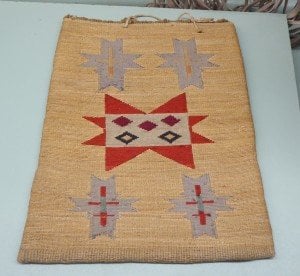
The Maryhill Museum located near Goldendale, Washington, has a display of Plateau flat bags. The Plateau Culture Area is the area between the Cascade Mountains and the Rocky Mountains in Washington, Oregon, Idaho, British Columbia, and Western Montana. From north to south it runs from the Fraser River in the north to the Blue Mountains … Continued

By admin

Klickitat Baskets

Long before the European invasion of North America, a number of autonomous, independent, and linguistically related peoples lived in contiguous territories in what would become the state of Washington. These peoples included the Yakama, Kittitas, Klikitat (also spelled Klickitat), Tainapam, and Wanapam. In 1855, the United States government forced a treaty on these people, grouping … Continued

By admin

Pomo Baskets in the Maryhill Museums

California Indian baskets are often considered the best in North America, and Pomo baskets are generally considered to be the best of the California baskets. In his book Encyclopedia of Native American Tribes, Carl Waldman reports: “The Pomos created their beautiful baskets for functional purposes, but collectors now value them as works of fine art. … Continued

By admin

Plateau Basketry Hats and Trinket Baskets

In looking at American Indian art, there is a different between tribal art and ethnic art. In his book Native Arts of North America, Christian Feest writes: “Tribal art was (and is) produced by members of tribal societies primarily for their own or their fellow members’ use.” One of the classic examples of tribal art … Continued