By admin

Some Apache Ceremonies

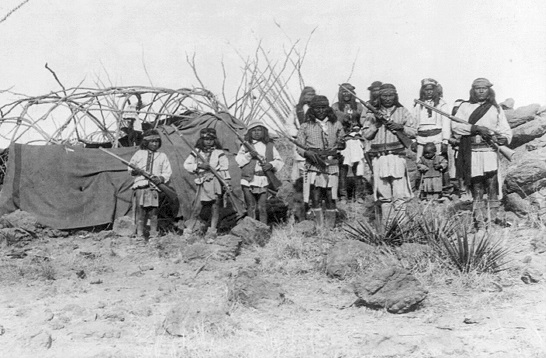
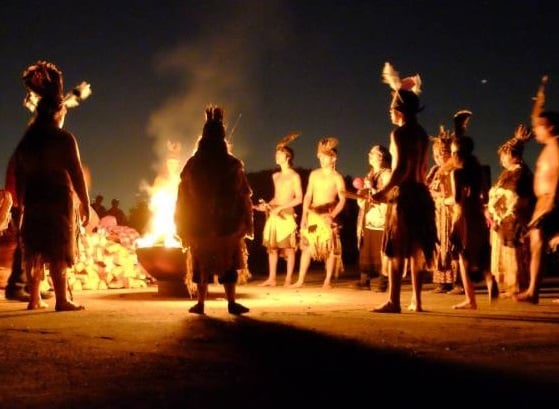
Traditionally, Apache religious ceremonies focused on curing, hunting and gathering rituals, puberty ceremonies, and obtaining personal power and protection. While spiritual power is available to most people, spiritual leaders–usually called medicine men and medicine women–are people who have greater access to spiritual power than other people. Among the Apache groups, the Gans (gaans) or Mountain … Continued
By admin

The Muskogean Language Family

Muskogean was the most important language family of the Native American Southeastern Culture Area. In her introduction to Florida Place Names of Indian Origin and Seminole Personal Names, Patricia Riles Wickman writes: “We shall never know with any certainty how many dialects derived from this mother tongue and from the social template that contained an … Continued

By admin

Death Valley National Park

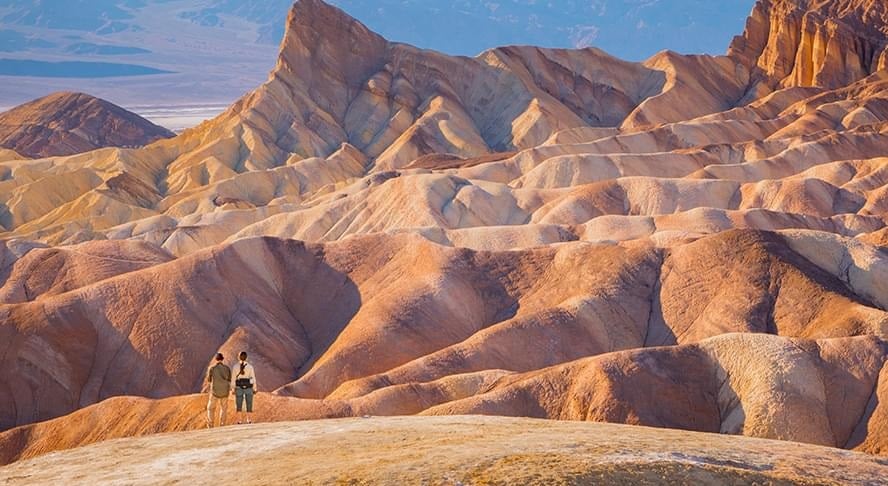
Death Valley, located in California, is the hottest, driest, and lowest place in the United States. It is an area of sand dunes and wilderness. Non-Indian tourism into this desolate region actually began in 1926 and in 1933 President Herbert Hoover created the Death Valley National Monument by Presidential Executive Order. While some saw this … Continued

By admin

Apache Warfare

While many non-Apache scholars and popular writers have labeled all the Apache as a fierce, war-like people, in actuality warfare was not glorified as it was in some other culture areas, such as the Great Plains. Warfare, in the form of raiding, was often an economic activity. Anthropologist Keith Basso, in his book The Cibecue … Continued

By admin

The Athabaskan Language Family

The Athabaskan (also spelled Athapaskan and Athabascan) language family is found in the western American Indian culture areas. Linguists feel that the Athabaskan language family is one branch of a larger genetic grouping called Athabaskan-Eyak. Eyak is a single language which was spoken on the south coast of Alaska and which is nearly extinct. Proto-Athabaskan … Continued

By admin

Some Indian Events of 1917

Briefly described below are a few of the American Indian events of 1917. Commissioner of Indian Affairs In the bureaucracy of American government, Indian affairs are administered by the Department of the Interior. The Commission of Indian Affairs, a political appointee, is directly responsible for administering the Indian Office (now called the Bureau of Indian … Continued

By admin

Some Indian Events of 1817

Briefly described below are some of the American Indian events of 1817. Treaties Following the Constitution, the United States recognized Indian nations as sovereign entities and thus negotiated treaties with them. In 1817, the primary focus of the treaties between Indian nations and the United States was for the United States to obtain title to … Continued

By admin

American Indians and the Korean War

The Korean War began on June 25, 1950 and ended on July 27, 1953.  As with other twentieth century wars, American Indian men did not hesitate to enlist. Many men came from Native cultures which had traditionally emphasized a warrior tradition. For many young men the Korean War provided them with the opportunity to count … Continued

By admin

Tribes and Reservations in 1917

During the nineteenth century, the United States had attempted to settle all Indians on well-defined reservations on lands deemed unsuitable for non-Indian development. Here Indians were to remain until they became extinct or had fully assimilated into the Christian American lifestyle. By the end of the nineteenth century, the government began the process of dismantling … Continued

By admin

World War I and American Indians

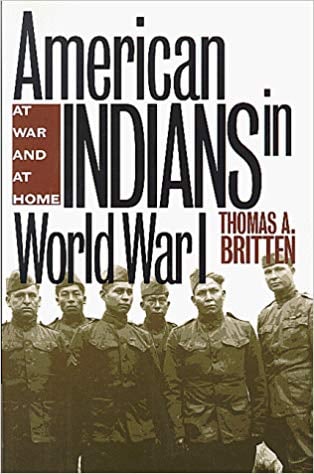
In 1914, the nations of Europe began the conflict which would become known as the Great War and later as World War I.  In 1917, President Woodrow Wilson called for the United States to enter what he called “the war to end all wars” and “to make the world safe for democracy.” The military estimated … Continued