By admin

Tlingit Migrations

The Northwest Coast, one of the most culturally and linguistically diverse culture areas in North America, occupies the area between the Pacific Coast and the mountains from Alaska through northern California. The Tlingit are the northernmost tribe in the Northwest Coast Culture Area. At the time of European contact, the Tlingit homelands included the coast … Continued

Tlingit Migrations

By admin

Shawnee Spirituality

The Shawnee, whose name means “Southerners”, once occupied a vast region west of the Cumberland mountains of the Appalachian chain in what is now part of Tennessee, Kentucky, Ohio, and West Virginia. Like the other Algonquian-speaking tribes of the western part of the Northeast Woodlands Culture Area, the Shawnee had a traditional economy based on … Continued

Shawnee Spirituality

By admin

Ancient America: The Northeast Prior to 8000 BCE

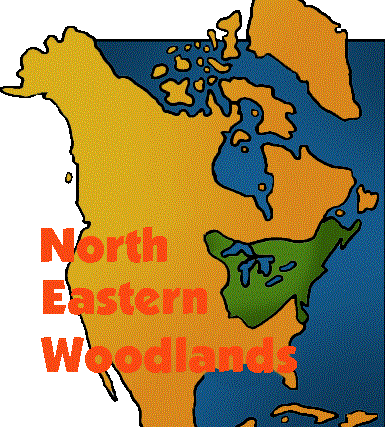
The Northeastern Woodlands of North America is a land of heavily forested rolling hills and rounded mountains, salt marshes of waving grass, calm lakes, tumbling brooks, surf-beaten beaches, and rocky coves. This culture area stretches west from the Atlantic coast to the Mississippi River, and from Virginia in the south to New Brunswick in the … Continued

The Northeastern Woodlands of North America

By admin

Hopi Political Organization

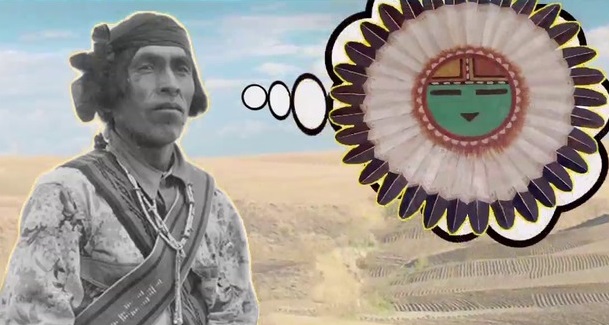
In 1934, the United States enacted the Indian Reorganization Act (IRA) which envisioned Indian tribes adopting constitutions and governmental forms which imitated those of the United States. The United States assumed that an Indian “tribe” was a governmental unit and that “reservation” and “tribe” were one and the same. There was little concern for or … Continued

Hopi Political Organization

By admin

An Experiment in Self-Government

In its dealings with Indian Nations, the United States often imposed an alien form of government on them. This government was not a democracy, but usually a dictatorship in which the leaders were chosen by the United States based on their willingness to follow the dictates and changing whims of the U.S. government. For a … Continued

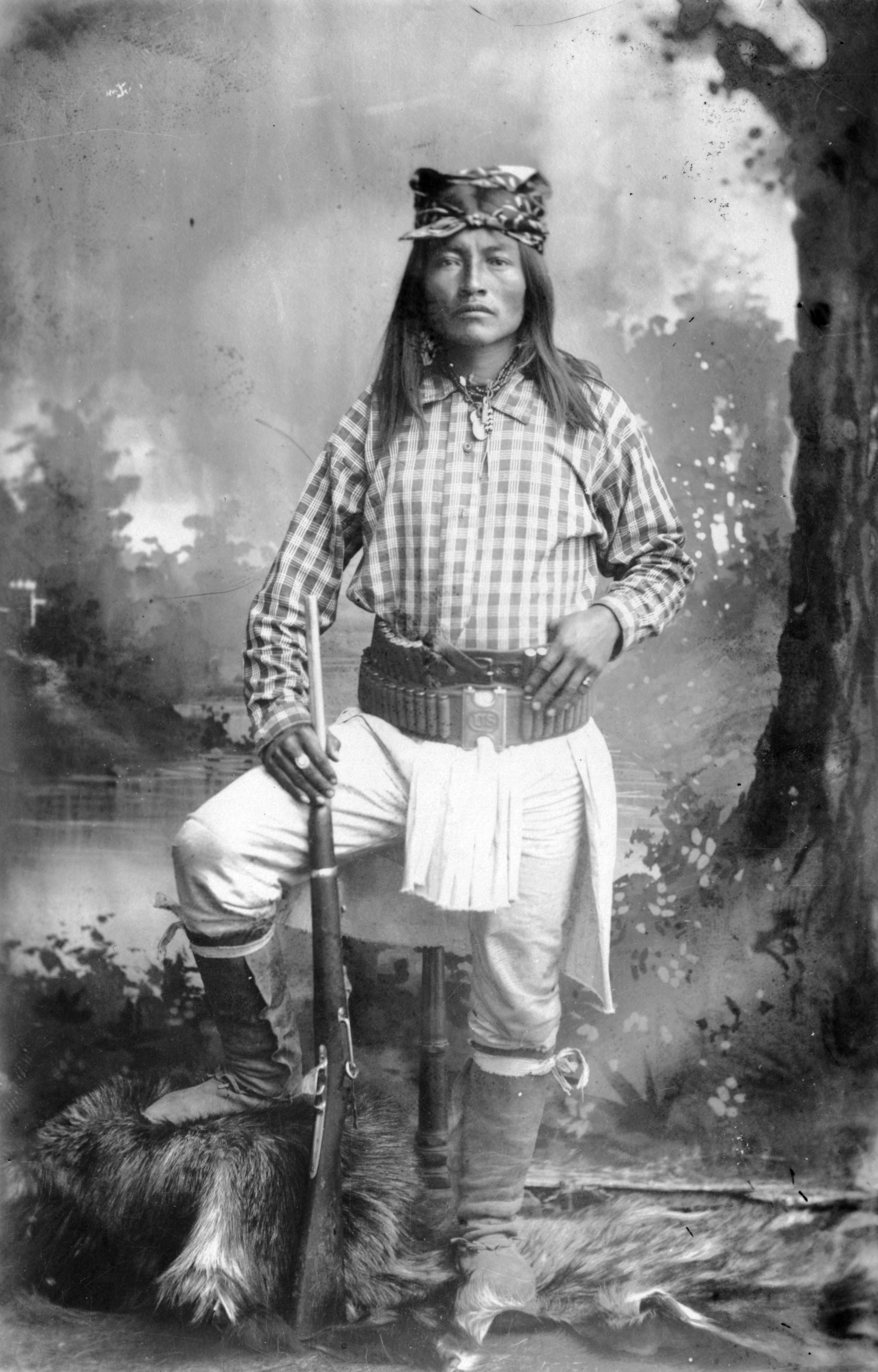
The Chiricahua Apache

By admin

Ancient America: Coastal Oregon, 13,000 to 7,500 Years Ago

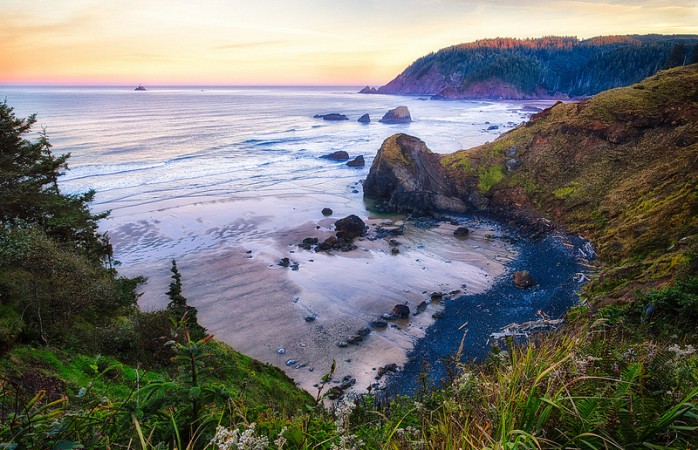
The Oregon coast is a part of the larger Northwest Coast culture area which stretches from the Tlingit homelands in Alaska to the Tolowa homelands in northern California. The cultures along this coastal ecotone (an area between two biomes) share a number of common features, including a subsistence pattern which is centered on sea and littoral … Continued

The Oregon coast

By admin

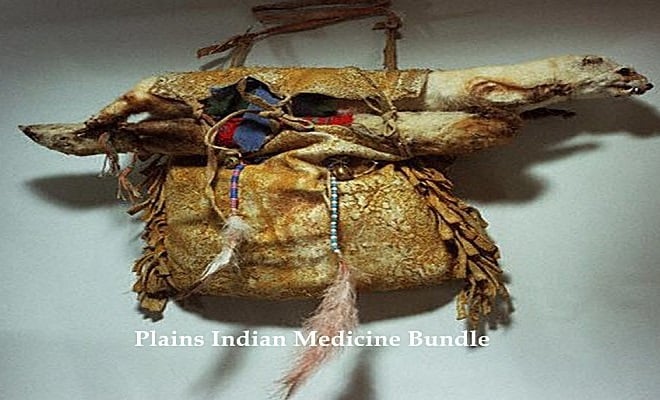
The Cheyenne Medicine Bundles

Medicine bundles are important to many of the Northern Plains tribes. The concept of “medicine” refers to spiritual power, which is not limited to healing. For the Plains Indians, spirit power—medicine—was needed for success in hunting, gambling, war, love, and other activities. The medicine bundle contains sacred objects which are symbols of spiritual power: they … Continued

The Cheyenne Medicine Bundles

By admin

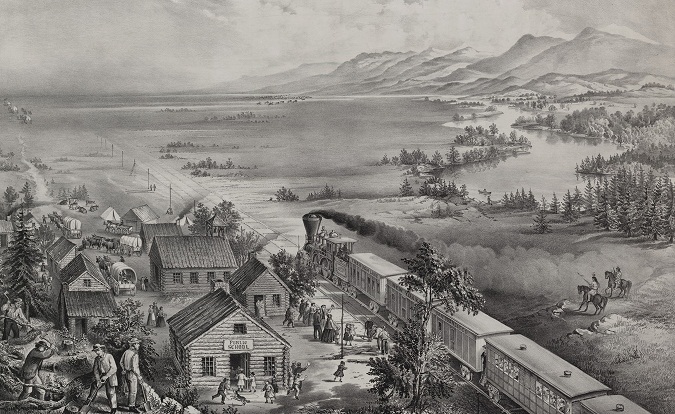
Sioux Opposition to Railroads in Montana in 1872

The westward expansion of the United States during the nineteenth century was guided by a quasi-religious philosophy of Manifest Destiny: America had been ordained by God to spread its territory across the continent. Americans generally felt that Indians, who supposedly owned the land, were, as an inferior race, destined to be pushed out of the … Continued

Sioux Opposition to Railroads in Montana in 1872.jpg

By admin

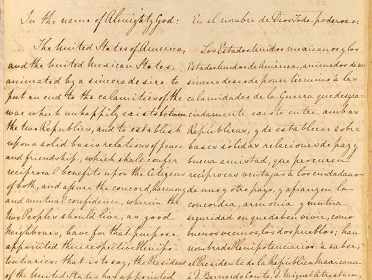
The Treaty of Guadalupe Hidalgo

While Mexico declared its independence from Spain on September 16, 1810, it did not actually obtain its independence until September 27, 1821. In the Plan de Iguala, Mexico did away with all legal distinctions regarding Indians and reaffirmed that Indians were citizens of Mexico on an equal basis with non-Indians. In other words, Mexico, unlike … Continued

The Treaty of Guadalupe Hidalgo

By admin

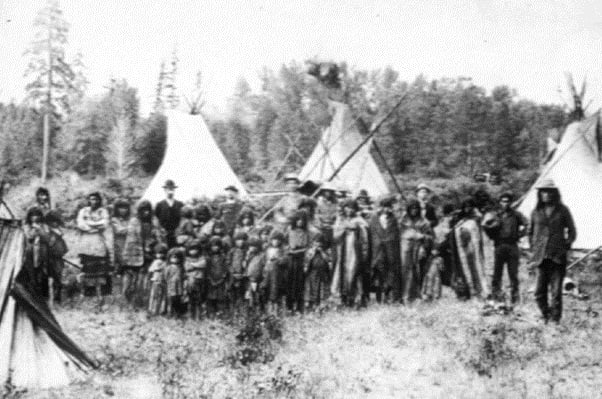
Kootenai Political Organization

The Kootenai (also spelled Kutenai), whose homeland was in the area west of the Rocky Mountains in what is today western Montana, northern Idaho, and southeastern British Columbia, are generally divided into two groups: Upper Kootenai and Lower Kootenai, referring to their position on the drainage of the Kootenay River. The Upper Kootenai lived near … Continued

Kootenai Political Organization.jpg