By admin

The Avonlea Complex

The common stereotype of Plains Indians sees them as horse-mounted buffalo hunters. The reality is, of course, that Plains Indians did not adopt the horse and its equestrian lifestyle until the eighteenth century. There were, however, bison hunting Indian peoples long before the arrival of the horse. On the grasslands of southern Saskatchewan and Alberta, … Continued
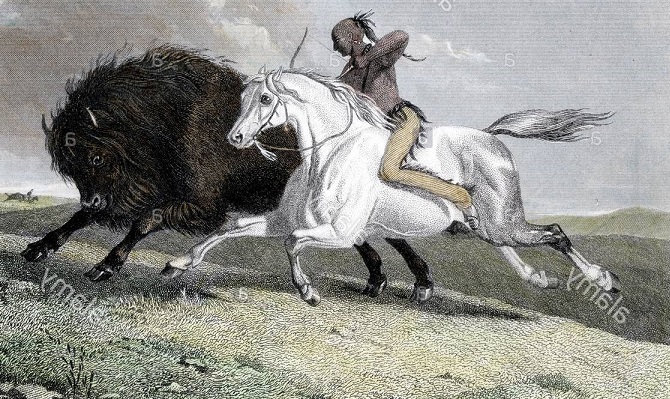
horse-mounted buffalo hunters

By admin

The 1837 Winnebago Treaty

During the first part of the nineteenth century, the American Indian policy was to remove Indians from east of the Mississippi River and to “give” them reservations in Indian Territory. Under the U.S. Constitution, Indian tribes were considered to be domestic dependent nations which meant that the federal government had to negotiate treaties with them. … Continued

American law

By admin

Suppressing Indian Religions in 1915

In 1915, the United States was firmly convinced that American Indians could assimilate only if they became Christians. To aid in the “civilization” (i.e. Christianization) of the Indians, Congress had formally outlawed Indian religions in the nineteenth century. On the reservations, Indians could be jailed without a trial for practicing or promoting any traditional Indian … Continued

Outlawing American Indian Religions

By admin

Reservations in 1915

During the nineteenth century, the United States had attempted to settle all Indians on well-defined reservations on lands deemed unsuitable for non-Indian development. Here Indians were to remain until they became extinct or had fully assimilated into the Christian American lifestyle. By the end of the nineteenth century, the government began the process of dismantling … Continued

Reservations in 1915

By admin

Dragging Canoe, Cherokee Leader

At the beginning of the eighteenth century the Cherokee were not a single political nation, but a linguistic and cultural grouping of about 50 villages. Dragging Canoe was born about 1730 somewhere in Tennessee. His father was Attakullakulla, a peace chief. Dragging Canoe first appears in the written European histories in 1775 when the Transylvania … Continued

Dragging Canoe, Cherokee Leader

By admin

Cherokee Government and the English

The primary unit of government among the Cherokee was the town. Each town—perhaps 50 at the time of first European contact—was autonomous. The government of each town was not tied to the government of other towns. These Cherokee towns were loosely affiliated into three groups: (1) the Lower Towns on the headwaters of the Savannah River … Continued

Dissolving Cherokee Government

By admin

Natick, A Christian Indian Village in Massachusetts

The English colonists in Massachusetts were sometimes conflicted with regard to Indians. Many colonists, viewing the New World as a wilderness, felt that Indians impeded civilization and like other wild animals, such as wolves and coyotes, should be exterminated. There were also a few who viewed Indians as potential souls to be harvested in the … Continued

Natick, A Christian Indian Village in Massachusetts

By admin

The Hoko River Complex

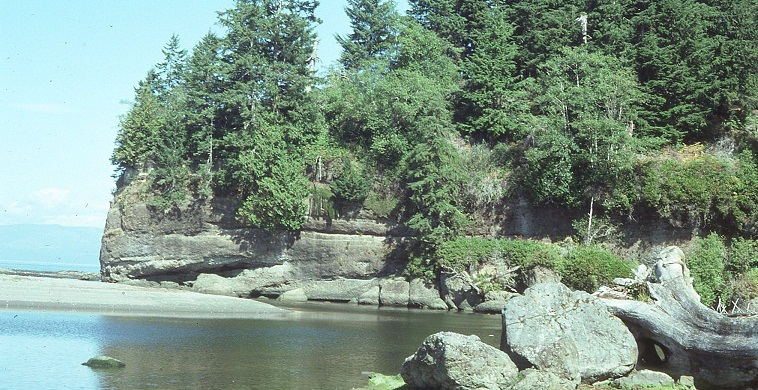
The Hoko River originates in the foothills of the Olympic Mountains (Washington State) and flows for about 25 miles to the Pacific Ocean. It flows into the Strait of Juan de Fuca about 16 miles east of the Makah town of Neah Bay. By 3,000 years ago, the Makah were using the area around the … Continued

The Hoko River Complex

By admin

Mormons and Indians

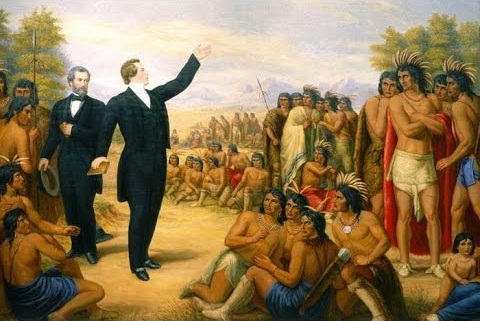
When Europeans began arriving in the Americas they brought with them the firm belief that all knowledge, including the history of the world, was contained in a special holy book which had been compiled from the oral traditions of southwest Asia. They were a bit surprised, therefore, when they encountered the aboriginal people of the … Continued

Mormons and Indians

By admin

The Yamasee War and the Indian Slave Trade

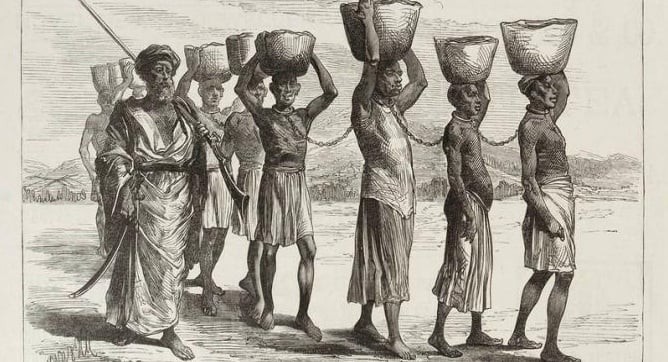
The Yamasee were a Muskogean-speaking Indian nation living in what would become southern Georgia and northern Florida when first encountered by the Spanish in the sixteenth century. In 1687, the Yamasees, unhappy with the Spanish occupation and rule of their territories, moved north in South Carolina, was then under British rule. In South Carolina, the … Continued

Indian Slave Trade