By admin

Nakaidoklini, Apache Spiritual Leader

President Ulysses Grant established the San Carlos Indian Reservation in Arizona by Presidential Executive Order in 1872. The newly created reservation was a division of the White Mountain Apache Reservation and was intended for the Chiricahua Apache as well as other tribes. Under Grant’s Peace Policy, the Dutch Reformed Church was given charge of the … Continued
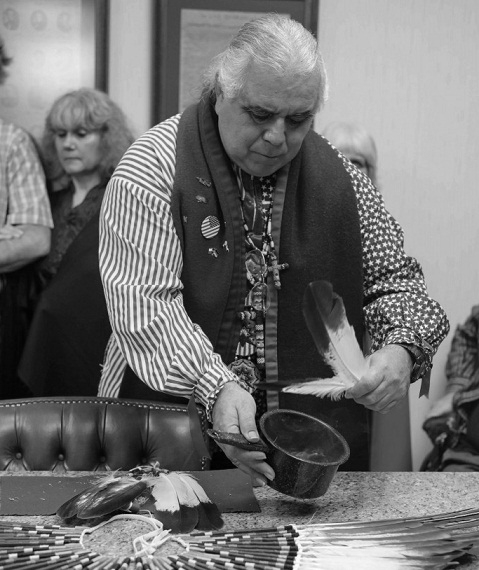
Apache Spiritual Leader

By admin

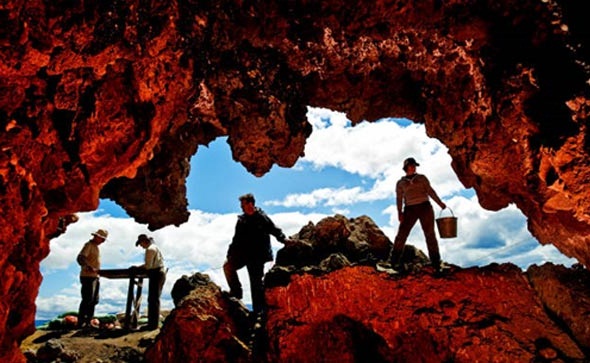
Occupation of Paisley Caves in Oregon

The earliest period of human occupation in what is now Oregon is called the Paisley Period by archaeologists. The period, which is tentatively dated from about 15,700 years ago to 12,900 years ago, is named after the Paisley 5 Mile Point Caves site (35LK3400) near Summer Lake. The Paisley Caves are located in the Summer … Continued

Paisley Caves in Oregon

By admin

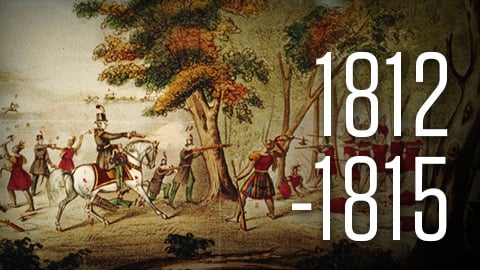
Indians 1815

Two hundred years ago, in 1815, the United States Senate ratified the Treaty of Ghent which ended the War of 1812. The treaty restored to all Indian nations all of the possessions, rights, and privileges which they had prior to the war. Robert Venables, in a chapter in American Indians/American Presidents: A History, reports:  “Under … Continued

Indians 1812 1815

By admin

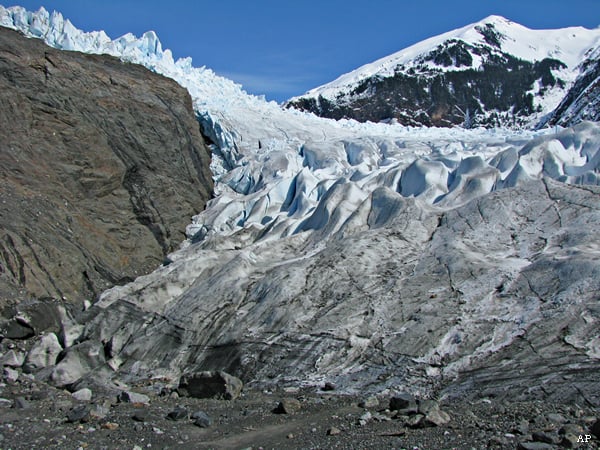
Alaska Before 6000 BCE

Archaeologists usually classify the period between 25,000 BCE and 6,000 BCE in Alaska as Stage 1, an era in which the first evidence of human habitation occurs. During much of this time, much of North America was under glacial ice and the sea levels were much lower. In the lower forty-eight states of the U.S., … Continued

Alaska Before 6000 BCE

By admin

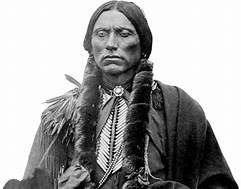
Eschiti, Comanche Medicineman

The Comanche held a Sun Dance in Oklahoma in 1874. This was not a traditional ceremony, but was one they had borrowed from the Cheyenne. The Sun Dance coincided with the emergence of a new medicine man, Eschiti (Coyote Droppings; also spelled Esa-tai). Bill Neeley, in his book The Last Comanche Chief: The Life and Times of Quanah … Continued

Comanche Medicineman

By admin

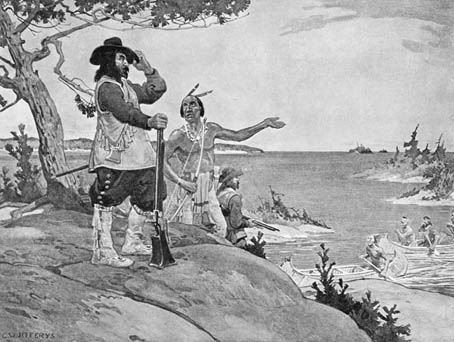
Indian Events of 1615

Four hundred years ago, in 1615, the European invasion of North America was in its infancy. Contact between the Indian nations and the Europeans was largely in the form of explorers, missionaries, and fur traders. The Europeans found that the Indian nations were diverse in their languages, cultures, and religions. Similarly, there were significant differences … Continued

Indian nations and the Europeans 1615

By admin

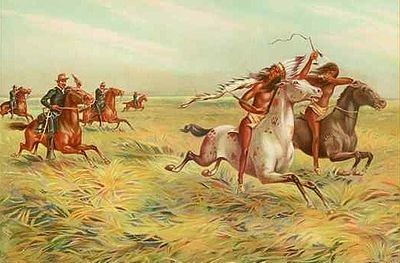
The Indian Wars of 1915

By the end of the nineteenth century, it was commonly believed by scholars, politicians, and the general public that Indians were destined to disappear. In the twentieth century, many scholars continued to write as though Indians did, in fact, disappear by the twentieth century. Since there weren’t supposed to be any Indians in the twentieth … Continued

The Indian Wars of 1915

By admin

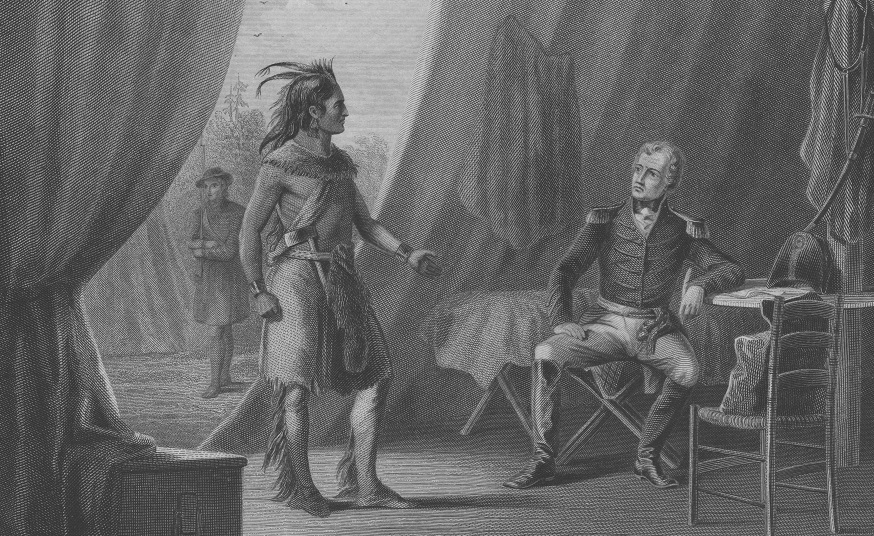
William Weatherford, Red Stick Leader

The designation “Creek” is a European concept which emerged during the eighteenth century to designate the Indian people who were living along the creeks and rivers in Alabama, Georgia, and northern Florida. While these people have a cultural continuity which reaches back to the mound building cultures of this area, the concept of a Creek … Continued

William Weatherford, Red Stick Leader

By admin

Aztec Metalwork

The concept of working with metal to fashion ornaments and tools did not originate in Mesoamerica but seems to have diffused into the region sometime in the seventh century from the south—Panama, coastal Ecuador, or Peru. Metal working seems to have diffused initially into West Mexico through maritime trade. According to Dorothy Hosler, writing in … Continued

Aztec Metalwork

By admin

The Avonlea Complex

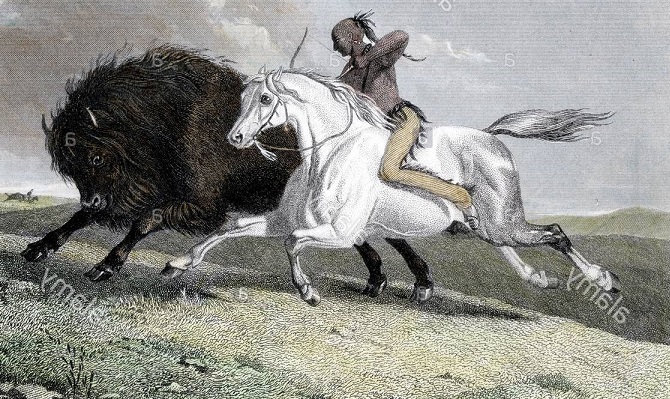
The common stereotype of Plains Indians sees them as horse-mounted buffalo hunters. The reality is, of course, that Plains Indians did not adopt the horse and its equestrian lifestyle until the eighteenth century. There were, however, bison hunting Indian peoples long before the arrival of the horse. On the grasslands of southern Saskatchewan and Alberta, … Continued

horse-mounted buffalo hunters