By admin

Joseph Brant in Canada

During the Revolutionary War, many Indians allied themselves with their old trading partners, the British. For the six tribes of the Iroquois Confederacy, the divided loyalties led to the ritual covering of their council fire so that each nation was free to choose sides. At the 1777 Battle of Oriskany, for example, the pro-British Iroquois … Continued
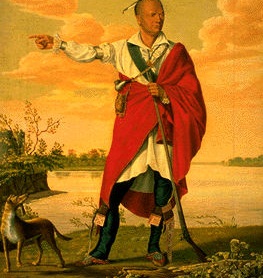
Joseph Brant in Canada

By admin

Fur Trade in the Rockies, 1800 to 1805

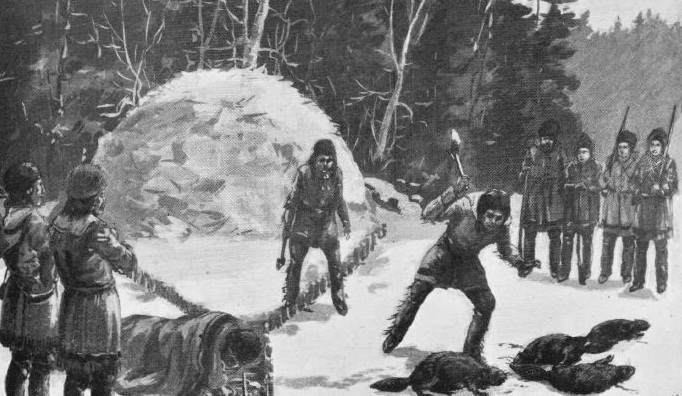
The fur trade was an important part of the economic history of North America and incorporated American Indian economies into a larger world economy. Furs were valuable, easily portable, and renewable resources. The prime furs—marten, otter, fox—were sold at high prices in the European and Chinese markets. Of less value, but still profitable, were pelts … Continued

Fur Trade in the Rockies, 1800 to 1805

By admin

Cherokee Treaty Claims

By 1830, the American government had decided that American Indians had no place in the United States and passed legislation calling for their removal to lands west of the Mississippi River. As a part of this removal effort, the Americans negotiated a series of treaties with the various Indian nations in which the Indians ceded … Continued

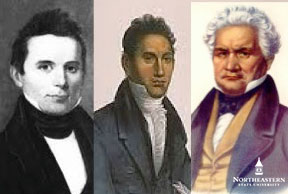
A few Cherokee leaders

By admin

Virginia and the Indians, 1606 to 1608

Because England is a Christian nation, the Discovery Doctrine supposedly gave it the right to govern all non-Christian nations. In 1606, therefore, England was able to give a Royal Charter to the Virginia Company to develop a market in the New World for English commerce and for “propagating of Christian Religion to such people, as … Continued

Virginia and the Indians, 1606 to 1608

By admin

Carolina Indians in 1700

Part of our knowledge of the Indian nations of the Carolinas during the early colonial period comes from the reports of European explorers. One of these was the British naturalist John Lawson, who led a small exploring expedition out of Charleston in late 1700. Traveling by canoe and by foot, he travelled about 600 miles … Continued

Carolina Indians in 1700

By admin

The Cherokee Civil War, 1845 to 1849

Following their removal in 1839 to what would later become Oklahoma, the Cherokee Nation was divided into two basic factions: the Treaty Party made up of those who had moved from their homelands in the American southeast voluntarily, and the National Party made up of those who had been forced to endure the Trail of … Continued

The Cherokee Civil War

By admin

Smallpox on the Upper Missouri in 1837

Smallpox was a European disease which devastated many American Indian tribes. Many European Christians viewed the smallpox epidemics as evidence of their god’s grace for them and felt that god was clearing the way for their settlement of the continent by destroying Indians societies. The European invaders sometimes helped god’s destruction of the Indians by … Continued

Smallpox on the Upper Missouri

By admin

Chief Kitsap

Suqamish Chief Kitsap lived from about 1750 to about 1845. He was born and raised in Suquamish (in what is now Washington state). He was a friend and ally of Chief Sealth’s father. Kitsap had winter houses at Fort Madison and Pleasant Beach on Bainbridge Island. He was known as a brilliant war strategist and … Continued

Suqamish Chief Kitsap

By admin

The Cherokee Civil War, 1842 to 1843

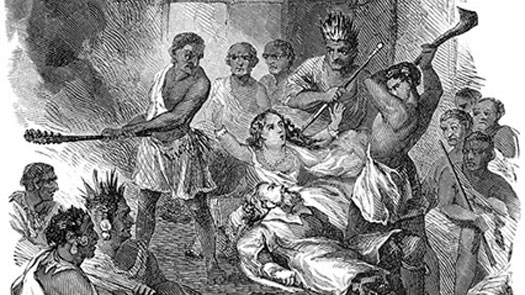
After their removal to Oklahoma in 1838, the hostile rivalry between two Cherokee political factions—the National Party which had resisted removal and the Treaty Party which had favored removal—became violent. In 1842, James Foreman, a member of the National Party, and Stand Watie, a member of the Treaty Party, encountered each other in a grocery … Continued

The Cherokee Civil War

By admin

A Cherokee Murder

Following the Trail of Tears in 1838, there were three groups of Cherokee living in Oklahoma: (1) The Old Settlers who had moved to the west prior to the 1830 Indian Removal Act, (2) the Treaty Party who had signed the removal treaty and had been moved in relative comfort, and (3) the National Party … Continued

Preparing the Cherokee for Removal