By admin

American Indians and Tobacco

In 2011, the Altria Group, the parent company of the tobacco company Philip Morris, released a white paper urging the state of New York to clamp down on tax-free cigarettes manufactured on Indian land. Indian tribes responded by announcing that they would no longer buy famous brand cigarettes manufactured by Philip Morris (Altria), Reynolds, American … Continued
American Indians and Tobacco

By admin

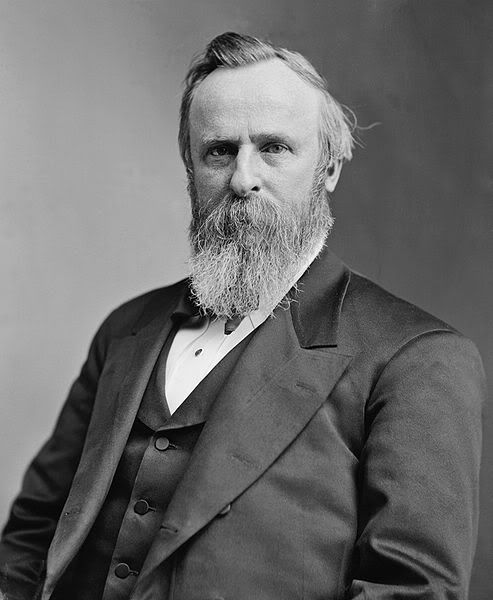
President Hayes and the Indians

The administration of Indian Affairs in the United States has always been political. The person in charge of Indian Affairs is the Secretary of the Interior who is appointed by the President. Thus, as control of the White House changes, so does the administration of Indian Affairs and the philosophy guiding the relationships between the … Continued

By admin

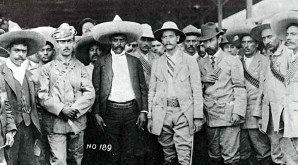
Invading Mexico in the 1880s

In the 1880s, the American wars against the Apache Indians ignored the border between the United States and Mexico, and the American military often ignored Mexico’s sovereignty in their eagerness to kill Apaches. This was a time when the American press often urged genocide against Indians, particularly against the Apache. Many of the military intrusions … Continued

Invading Mexico in the 1880s

By admin

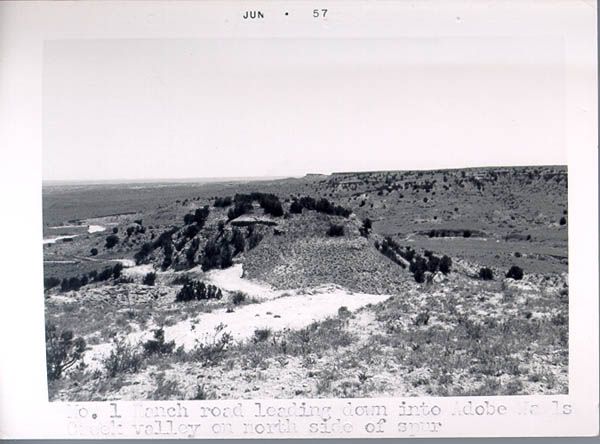
The Red River War

After 1871, the United States’ policies regarding American Indian nations was no longer based on negotiating treaties, but on concentrating Indians onto reservations where they could be “civilized” by forcing them to become English-speaking Christian farmers. In his annual report to Congress in 1872, Commissioner of Indian Affairs Francis A. Walker wrote: “There is no … Continued

By admin

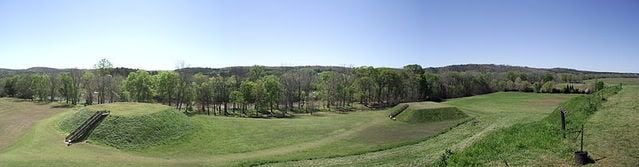
Etowah

Mississippian is a cultural complex which spread from its hearth on the Mississippi River in Illinois throughout much of the Southeast. The most spectacular characteristic of Mississippian material culture is the construction of earthen pyramids. The pyramids, usually called mounds, have a flat top which provided a space for a ceremonial building or a chiefly … Continued

By admin

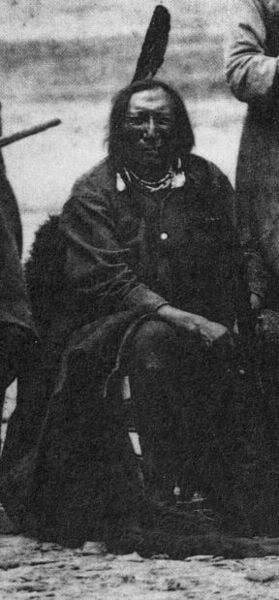
The Bozeman Trail

In 1851, the United States called a treaty council at Fort Laramie, Wyoming which was attended by 8,000 – 12,000 Indians from the Cheyenne, Arapaho, Shoshone, Crow, Assiniboine, Arikara, Gros Ventre, Mandan, and Hidatsa tribes. The purpose of the council and of the resulting treaty was to establish peace between the United States and the … Continued

By admin

The Northeastern Late Woodland Period

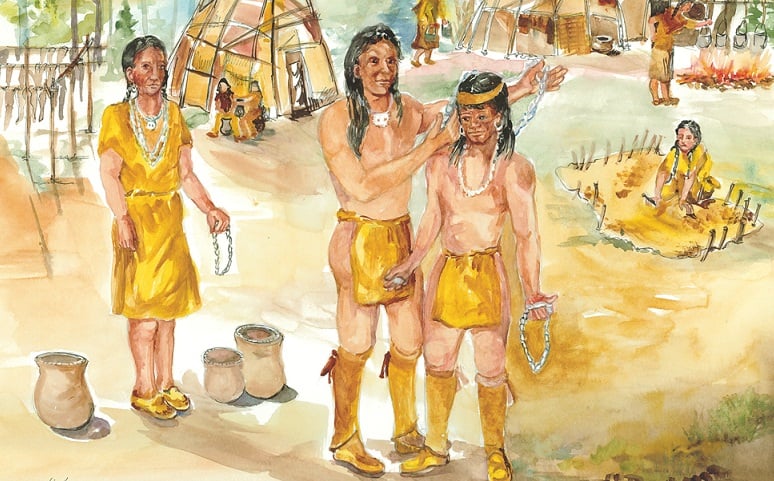
The time period from about 400 CE to 900 CE in northeastern North America is called the Late Woodland period by archaeologists. This was a time of major population growth and the introduction of new technology, including the bow and arrow.   While a native agriculture had developed in North America prior to this time, … Continued

The Northeastern Late Woodland Period

By admin

The Naming of America

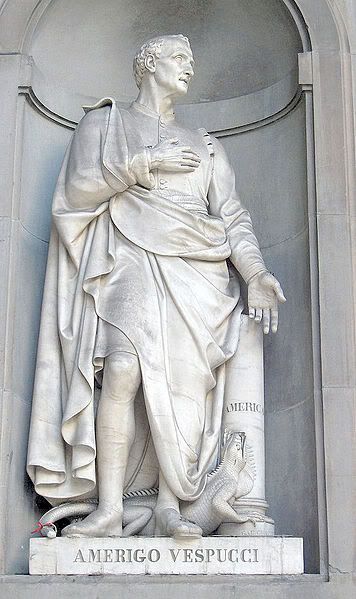
America was named on April 25, 1507 after the Florentine explorer Amerigo Vespucci. The process of naming the continent (initially what is now South America) came about through the interface of several processes, including the printing press, advances in geography, and cartography. All of these forces came together in the early 1500s in the town … Continued

By admin

The Klamath River Salmon War

Traditionally fish were an important food resource to most of the northern California tribes. Indian nations such as the Hupa, Karuk, Achomawi, and Yurok relied heavily on the salmon.  Also important to some of the tribes were steelhead, sturgeon, trout, and lamprey eels. A Yurok plankhouse is shown above.   A photograph of a Hupa … Continued

By admin

1962

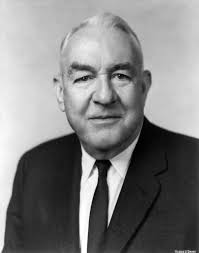
Looking back at what was going on in Indian country in 1962-fifty years ago-reminds us that many of the problems we face today were being discussed then. Further, we are currently living with the consequences of some of the actions, particularly court decisions, which were made at that time.   Indians and the President: At … Continued

Senator Sam J. Ervin, Jr.