By admin

Ancient America: The Vikings

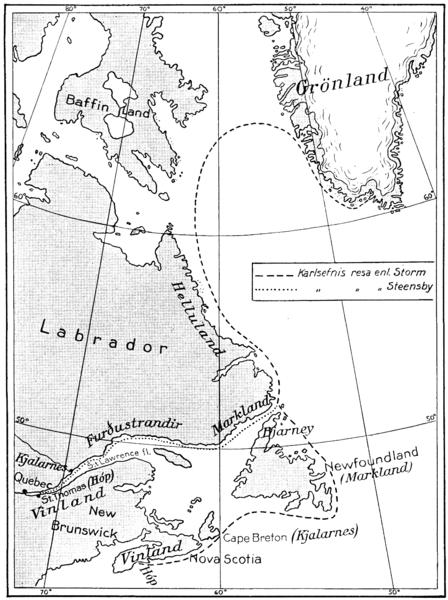
Shortly after the Norse colonization of Greenland under Erik the Red in 986, there were reports by the Viking sea kings of three new lands to the west of Greenland: Helluland (Baffin Island and the northern part of Labrador); Markland (central and southern Labrador); and Vinland (Newfoundland and the Gulf of Saint Lawrence. Over the … Continued

By admin

Ancient America: Pictographs

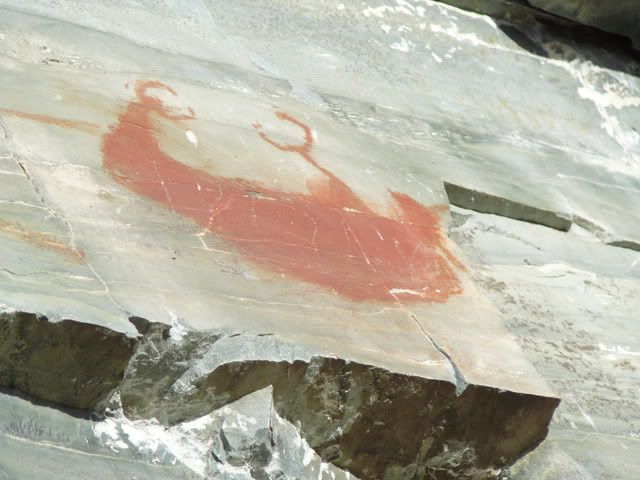
For thousands of years Indian people left evidence of their presence on the land with rock art: pictographs and petroglyphs. Pictographs are created by painting on rock surfaces with natural pigments while petroglyphs are pecked, carved, or abraded into the surface of the rock.   Pictographs are usually found under protective ledges or in caves … Continued

By admin

Idaho’s Weiser Shoshone

In Idaho, an 1867 editorial in a Boise, Idaho newspaper stated: “This would be our plan of establishing friendship on an eternal basis with our Indians: Let all the hostile bands of Idaho Territory be called in (they will not be caught in any other manner) to attend a grand treaty; plenty of blankets and … Continued

Idaho’s Weiser Shoshone

By admin

Reforming Indian Policy

Following the Civil War, American politicians and influential citizens were acutely aware that there were major problems with the administration of U.S. policies regarding Indians. Congress appointed a special committee to investigate and debate a number of possible solutions. In 1867, a special committee of Congress chaired by Wisconsin’s Senator James Doolittle reported that Indians … Continued

By admin

143rd Anniversary of the Washita Massacre of Nov. 27, 1868

The intent to commit genocide at Washita is hidden in plain view, unless key elements are brought together. These are: that the Cheyenne were placed on land where they would starve while promises to avert starvation were broken; that George Bent observed how Civil War soldiers did not harm white women and children by a … Continued

By admin

Spokan Garry

In 1825, Governor George Simpson of the Hudson’s Bay Company conceived the idea of selecting some Indian boys from the Columbia River tribes in present-day Washington and Idaho and sending them east to the Anglican mission school at Red River in Manitoba to be educated. His idea was that these boys could help in “civilizing” … Continued

By admin

The Navajo and Mexico

In 1821 Mexico obtained independence from Spain. In the Plan of Iguala, Mexico did away with all legal distinctions regarding Indians and reaffirmed that Indians were citizens of Mexico on an equal basis with non-Indians. In what is now New Mexico and Arizona, this means that the various Navajo bands now had to deal with … Continued

By admin

Denying Indian Nations Legal Representation

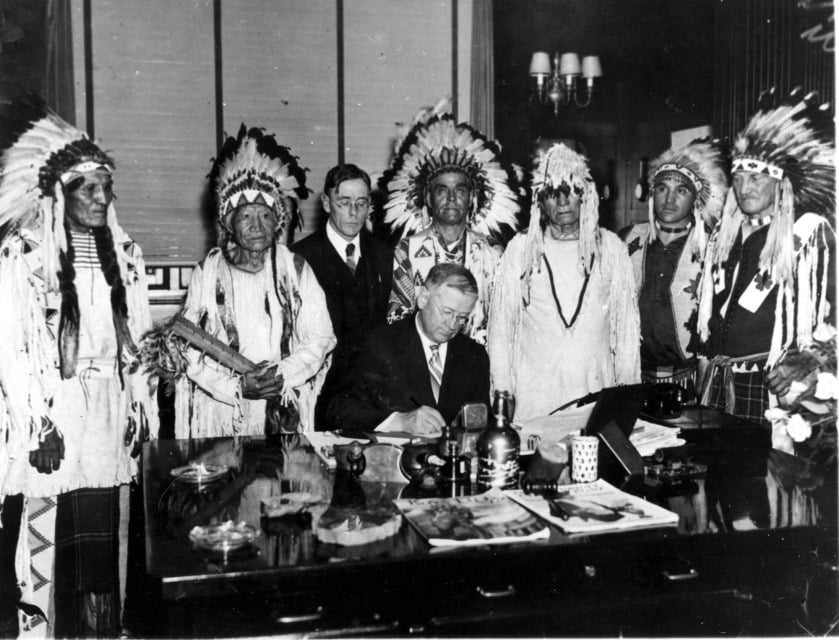
With the passage of the Indian Reorganization Act (IRA) in 1934, the United States government sought to bring economic development to Indian reservations by making them into a kind of corporation. Under the IRA, tribes could now enter into contracts and, more importantly, they could hire their own attorneys. Following World War II, government policies … Continued

Indian Reorganization Act

By admin

Centuries of Genocide: Modoc Indians, Part III

( – promoted by navajo) photo credit: Aaron Huey The Battle of Lost River In Part II, I had concluded with the Third Generation’s great crisis. The Modoc were destroyed as an independent people, and forced into being part of the Klamath Tribes on Klamath Indian land, to the north, in Oregon. Keintpoos with Cho’ocks … Continued