By admin

Mormons and Indians

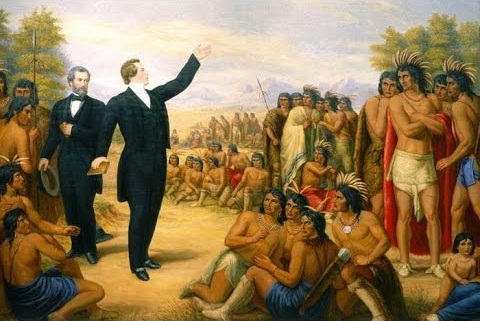
When the European explorers, soldiers, missionaries, and colonists arrived in the Americas, they viewed the world through the lens of Christianity. Encountering peoples who were not mentioned in the Bible, there were great debates about who these people were and, if they were truly human, how they travelled from the mythical Garden of Eden, which … Continued
Mormons and Indians

By admin

Plateau Flat Bags in the Maryhill Museum (Photo Diary)

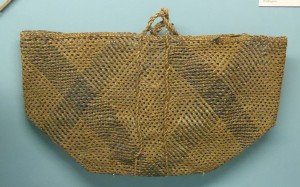
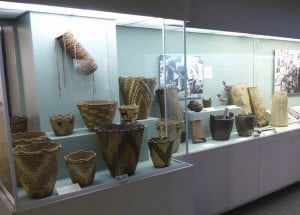
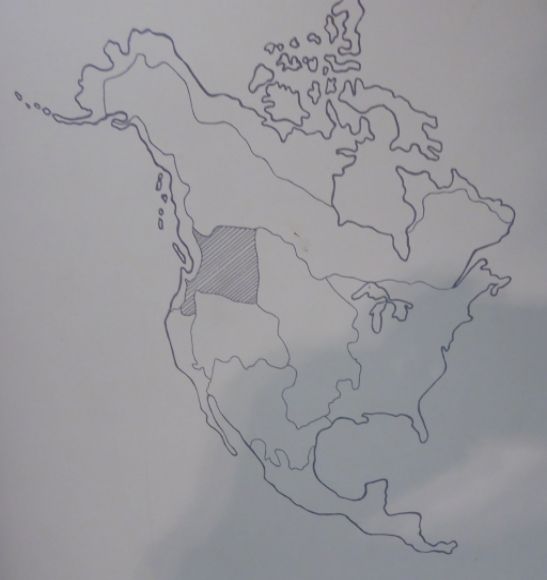
The Maryhill Museum located near Goldendale, Washington, has a display of Plateau flat bags. The Plateau Culture Area is the area between the Cascade Mountains and the Rocky Mountains in Washington, Oregon, Idaho, British Columbia, and Western Montana. From north to south it runs from the Fraser River in the north to the Blue Mountains … Continued

By admin

American Indians in 1618

During the first part of the seventeenth century, conflicts and potential conflicts between American Indians and the invading Europeans increased. Enamored with the idea of gaining personal wealth through the exploitation of Indian lands, four European countries—France, England, Netherlands, and Spain—established permanent colonies in the Americas. Archaeologist Jerald Milanich, in his book Laboring in the … Continued

By admin

Ancient America: Columbia River Pictographs

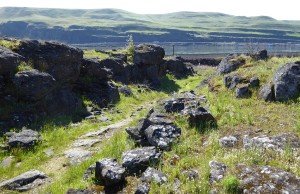
For more than 10,000 years Indian people have lived adjacent to the Columbia River. In the Columbia Gorge area, hundreds, if not thousands, of archaeological sites provide silent testimony to this long period of human occupation. Rock art, in the form of petroglyphs and pictographs, is found throughout the area. The area along the Columbia … Continued

By admin

Plateau Indian Beadwork in the Maryhill Museum

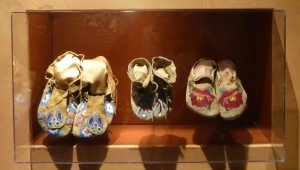
The Maryhill Museum located near Goldendale, Washington, has a display of Plateau beadwork. The Plateau Culture Area is the area between the Cascade Mountains and the Rocky Mountains in Washington, Oregon, Idaho, British Columbia, and Western Montana. From north to south it runs from the Fraser River in the north to the Blue Mountains in … Continued

By admin

Ancient America: American Indians at Rancho La Brea

For thousands of years, American Indians used the asphalt from the tar seeps of Rancho La Brea in what is now Los Angeles, California, for many different things. The displays at the La Brea Tar Pits Museum show many of the Native uses of the tar and display some of the artifacts which archaeologists have … Continued

By admin

Inupiaq Art

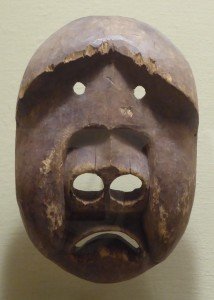
The Inupiaq homeland is in Northwest Alaska and North Alaska. The Portland Art Museum has some Inupiaq items on display. Shown above: Inupiaq mask made about 1900 from wood Shown above. Inupiaq pipe made about 1900 from ivory, wood, and paint. The art work on the pipe shows a walrus hunt in which the hunter … Continued

By admin

Family and Reservation Community in the Columbia Plateau

The High Desert Museum in Bend, Oregon, has a display Family and Reservation Community which shows how Plateau Indian identity has been preserved by families. According to the Museum display: “Since ancient times, the Plateau family served as the sanctuary of identity. Despite the changes brought about by reservation life, many Plateau Indians refused to … Continued

By admin

Northwest Coast Baskets

The Northwest Coast culture area stretches along the Pacific coast between the Cascade Mountains and the ocean. It extends north of California to Alaska. This is an area which is the home to many Indian nations who traditionally based their economy on the use of sea coast and river ecological resources. The Northwest Coast culture … Continued

By admin

Klickitat Baskets

Long before the European invasion of North America, a number of autonomous, independent, and linguistically related peoples lived in contiguous territories in what would become the state of Washington. These peoples included the Yakama, Kittitas, Klikitat (also spelled Klickitat), Tainapam, and Wanapam. In 1855, the United States government forced a treaty on these people, grouping … Continued