By admin

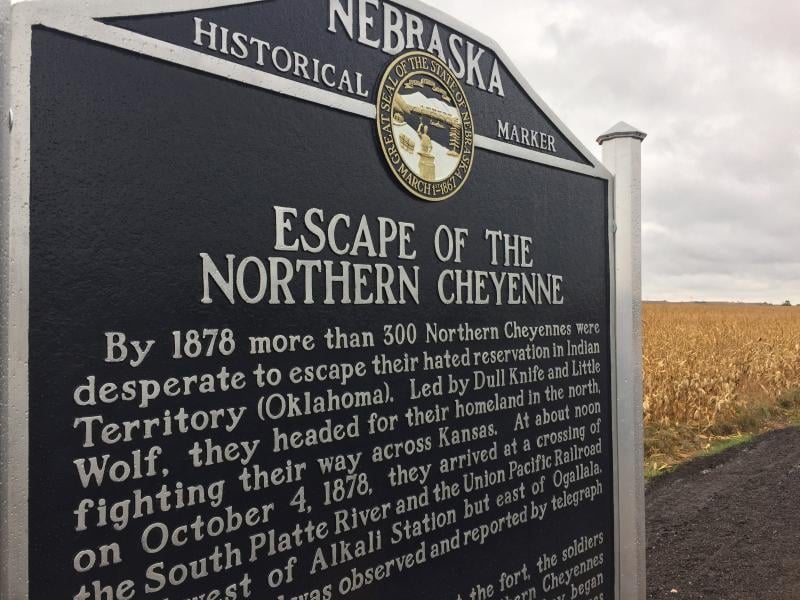
The Northern Cheyenne Escape

At the 1851 Fort Laramie treaty council, United States officials failed to understand that there were two distinct Cheyenne tribes: the Northern Cheyenne whose territory included the Black Hills, and the Southern Cheyenne who had migrated to the southern plains. The United States assigned all of the Cheyennes, both Northern and Southern, to a reservation … Continued
By admin

Religion on the Fort Hall Reservation, 1867 to 1899

Following the American Civil War, the federal policy toward Indians was to confine them to reservations and to reduce the size of reservation to accommodate non-Indian agricultural, grazing, mining, and railroad interests. On the reservation, Indians were to become farmers, even if the reservation land was not suitable to farming; they were to become English-speaking … Continued

By admin

Indians as People Under the Law

Very soon after the Spanish began their invasion of this continent, both the European courts and clergy declared Indians to be “people” in a biological and spiritual sense. However, the concept of Indians as “people” in a legal sense was tested in the United States in 1879. In 1877, the United States had forcibly removed … Continued

By admin

The Sheepeater Indian War

It is not uncommon for Indian tribes to be named for the food they consume. One group of Bannocks and Shoshones living in the mountains between Idaho and Montana were called Sheepeaters because mountain sheep were the mainstay of their food supply. In 1879, the deaths of five Chinese miners were attributed to the Sheepeaters, … Continued

By admin

The Sioux in 1866

The designation “Sioux” is used to describe many different tribes who are divided into three linguistic divisions: Dakota, Nakota, and Lakota. While relative late-comers to the Northern Plains—they did not become horse-mounted Plains Indians until about 1775—by 1866 they had a reputation among non-Indians as one the of the fiercest and most war-like Plains Indians. … Continued

The Sioux in 1866

By admin

The Idaho Indian Conflicts of 1866

Idaho became a territory during the Civil War: in 1863 President Abraham Lincoln signed the legislation creating Idaho out of portions of Washington and Dakota Territory. Following the Civil War, in 1866, there were a number of conflicts between the aboriginal inhabitants of the territory and the invading Americans. Some of these conflicts are briefly … Continued

By admin

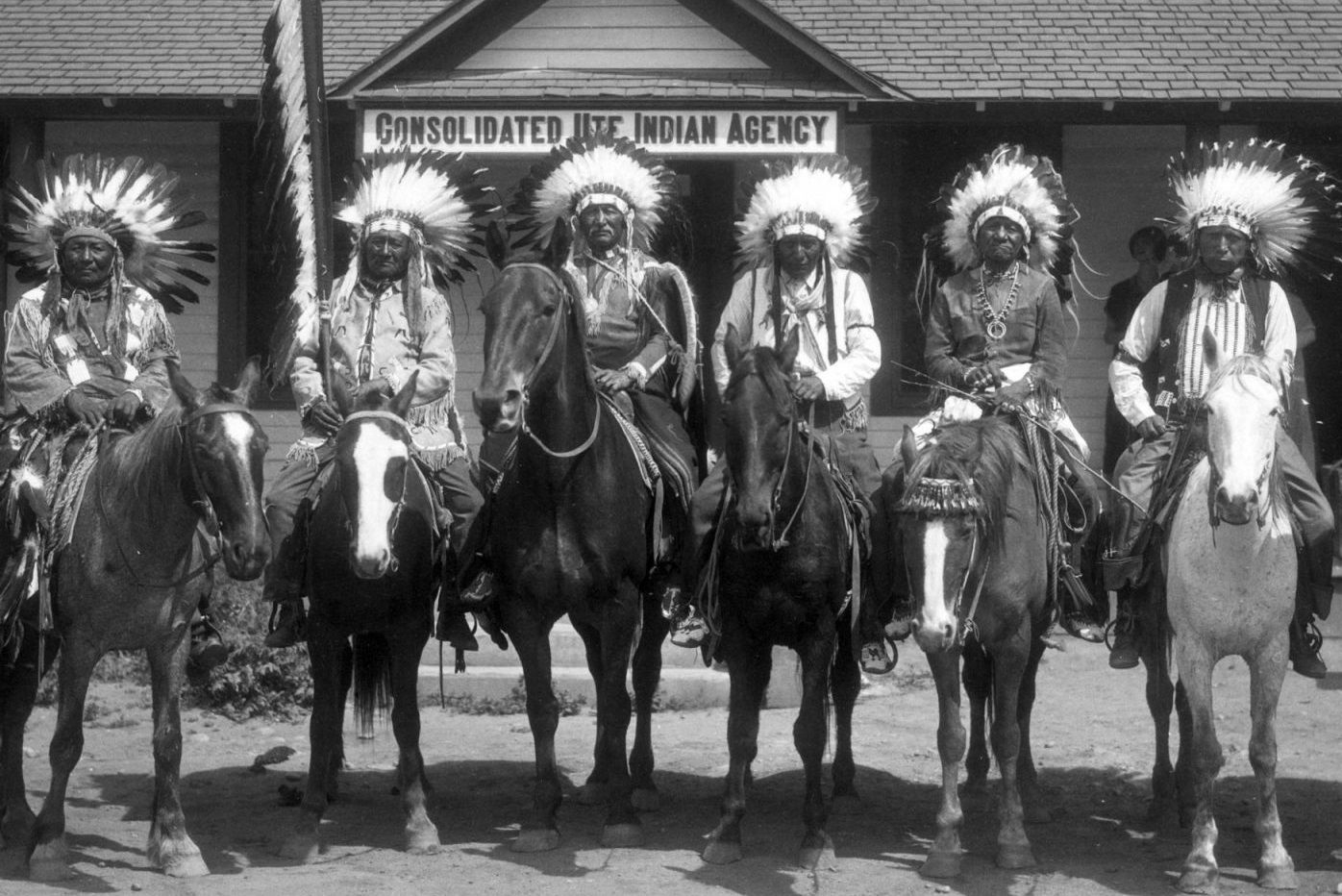
The Utah Indian Wars of 1866

While Mormon settlement of Utah began in 1847, American Indians had inhabited the region for thousands of years. The Mormon settlements displaced and disrupted the way of life for the Paiutes, Gosiutes, Shoshones, Utes, and Navajos. One hundred and fifty years ago, in 1866, there were a number of Indian wars or conflicts. Some of … Continued

Ute Indian Tribes

By admin

Oklahoma Indians in 1866

At the beginning of the Civil War in 1861, the United States withdrew its troops from Forts Cobb, Arbuckle, and Washita and, afraid that annuity payments might fall into the wrong hands, withheld the annuities which were owed to the tribes. The Confederacy moved into the vacuum left by the federal government and held treaty … Continued

Oklahoma Indians in 1866

By admin

The Iroquois League

Long before the Europeans arrived on this continent there was born to the Huron people a man who had a vision of bringing peace to his people. In his vision he saw a great pine tree. The roots of this tree were five powerful nations. From these roots, the tree grew so high that its … Continued

By admin

The Bannock War

A casual reading of almost any book on American history—from popular accounts to textbooks to scholarly tomes—reveals that there have been a lot of conflicts or wars with American Indians since the creation of the United States. In 1907, the War Department officially enumerated 1,470 incidents of military action against American Indians between 1776 and … Continued

The Bannock War