You have just received an invite to join this blog. Please leave a comment with your Daily Kos screen name and let us know you are signed up.
Thanks again for volunteering to help us focus attention on pro-active and preventative applications to improve current conditions on our Nation's neediest reservations.
We will create a diary series devoted to bringing attention to conditions on our reservations and promoting long term solutions such as alternative energy, green housing, creating jobs, emergency responding plans, etc.
We have contacts now on:
Rosebud cacamp (Carter Camp)
SarahLee
Pine Ridge Autumn TwoBulls (not signed up yet here or Dkos)
Navajo navajo (I don't live there but have many contacts)
I believe some of you live near rezs, let us know.
It would be nice to eventually have a contact on each rez.
Check in below and feel free to tell us a little about yourself, maybe what state you live in and anything to help us develop an understanding of each other.
I have been told that your area news and the National news will not carry the story for my people unless and until CNN carries it. Each day someone has told me they have gone to CNN on Facebook, their website, or called into report our story, since the 12/20/09 State of Emergency was issued.
The aboriginal Taíno name for the island that is today called Puerto Rico is Borinquen and thus people from the island are Boricuas. While the Taínos were the dominant aboriginal group on the island when the Spanish arrived in 1493, they only arrived on the island in the seventh century. They replaced an earlier island culture and by the year 1000 had become the dominant political, economic, and cultural power on the island.
In response to an earlier diary on American Indians as slaves, one reader asked what happened to the Indians who had been taken to Europe. While most died in Europe, often from unfamiliar diseases, there were a few who returned to their people in North America. This is the story of one who came back.
I was pretty exhausted from moving again for the third time in six months for good reasons, although I had to sweep a few streets till I got the job I moved for. Pictures weren't hung up yet when this racial utterance came out of Steele's mouth.
At the beginning of the European Age of Discovery in the sixteenth century, Europeans knew that all human beings had originally come out of the Garden of Eden and that this Garden of Eden was located at the confluence of the Tigris and Euphrates Rivers in present-day Iraq. They knew this because of the stories in their origin myths and they accepted these myths as absolute fact. Thus, when they encountered people living in the distant Americas, they were faced with two basic problems: (1) were these people human, and (2) if they were human, how did they get from the Garden of Eden to the Americas? Related to the second question is the question of why these people were there.
It is estimated that there were between 250 and 400 distinct American Indian languages were being spoken in what is now the United States and Canada at the time of first contact with Europeans. By the 1960s, there were 175 Indian languages still being spoken north of Mexico. Of these languages, 136 had fewer than 2,000 speakers and 34 had fewer than 10 speakers. By 2007, it was estimated that only 154 Indians languages were still being spoken and that half of these were spoken only by elders.
At the present time, it estimated that there are 46 Indian languages which are still being spoken by significant numbers of children. Languages which are being learned by children have some chance of survival. A flourishing language is one in which the contact or colonial language (English) is used almost entirely as a second language. In North America only Navajo, Mississippi Choctaw, and some Cree communities fit this definition.
During the first part of the twentieth century, American Indians were granted citizenship by Congressional action on several different occasions. While citizenship is often felt to be associated with the right to vote, this has not always been the case with regard to Indians. The right to vote is a right which has been traditionally controlled by the states. The states had tended to view Indian voting and Indian citizenship as two separate items. While the struggle by African Americans to obtain the right to vote is fairly well known, the struggle by American Indians to obtain this right is less well known.
A treaty is simply an agreement between two sovereign nations. In the American political system, a treaty involves three basic steps:
(1) First, there is negotiation. Representatives from the U.S. government meet with representatives of the other governments, discuss mutual concerns, and arrive at some sort of agreement.
(2) This is then followed by Senate confirmation. The Senate, according to the Constitution, advises the President on international matters. Thus, the Senate has the opportunity to debate and discuss the agreement, and to confirm it.
(3) Finally it is signed-proclaimed-by the President.
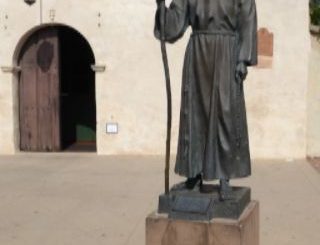
At the time of first European contact, California had the widest variety of Native American languages and cultures in North America: there were more than 100 languages, making it the most linguistically diverse area in North America. We don't know exactly how many tribes there were in California prior to the Spanish invasion. Today, there are many different Indian nations in California which are classified as "Mission Indians." There are many tribes, such as the Luiseño, Gabrielino, and Juanino, who take their names from the Spanish missions rather than their aboriginal designations. In order to understand how these Mission Indian nations were formed, we must start by looking at the Spanish missionary efforts in California.
Perhaps the best known Virginia Indian is Pocahontas. Her story has become a myth among non-Indians which perpetuates many common stereotypes and misunderstandings about Indian people in Virginia.
Since the early days of the European invasion of the North American continent there has been a great deal of effort and concern expended regarding the education of American Indians: education that would teach them European ways and help strip them of any vestiges of Native American culture. A number of well-known educational institutions, such as Harvard University, actually have their roots in Indian education.
In this diary I would like to examine some of the efforts of the English colonists to provide a European-style education for American Indians. Much of this education focused on the training of Indian missionaries and ministers.
When the subject of slavery in the Americas is discussed, many people assume that this is about the 13 million Africans who were captured, enslaved and transported to the Americas to work on the plantations. Yet the history of slavery in the Americas starts long before this. From the very beginning of the European discovery of the American continents, Europeans were involved with slavery: not African slaves, but American Indians.
The oral history of the Mohegan tells that they came from "west by north" of another country, that they passed over great waters, that they had once lived beside a great body of water affected by tides, and from this they obtained their name - Muh-he-con-nuk - which means "great waters which are constantly moving". They faced great famine and migrated toward the east where they found many great bodies of water, but none which flowed and ebbed.
As with other eastern tribes, corn was one of the principal foods of the Mohegan. Corn was prepared in a number of ways, including making hominy of the kernels and making a stew of beans and corn called succotash. Succotash is a basic American Indian dish. Among the Indian nations of the Northeast, succotash was kept simmering at all times so that any hungry visitor or family member could be fed.
The 35-year-old chairman was camped on 7,100 acres of wind-swept, snowy land owned by Crow Creek Tribal Farms. The IRS recently seized the tract and on Dec. 3 auctioned it off for $2 million less than its $4.6 million value to pay a purported tax bill for the tribe, a separate legal entity.
...a forum for the discussion of political, social and economic issues affecting the indigenous peoples of the United States, including their lack of political representation, economic deprivation, health care issues, and the on-going struggle for preservation of identity and cultural history
- Help me keep this community blog goin'. --navajo
NDN News and Links
The Indigenous Democratic Network, INDN's List, is the only grassroots political organization devoted to recruiting and electing Native American candidates and mobilizing the Indian Vote throughout America on behalf of those candidates.
Indigenous Peoples and Human Rights News by Brenda Norrell